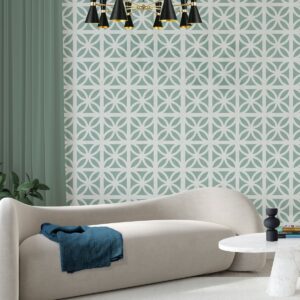
The living room is one of the best places in the house to use wallpaper – and also one of the easiest rooms to get wrong.
There is usually more to think about than simply finding a pattern you like. The size of the room, natural light, furniture, flooring and even where you sit can all affect how a wallpaper looks once it is on the wall.
Then there is the question that causes plenty of decorating indecision: should you wallpaper one wall or the whole room?
There isn’t one answer that works for every living room. Here are some ideas to help you find an approach that suits yours.
1. Don’t automatically choose a feature wall
For years, the default approach to patterned wallpaper was to put it on one wall and paint the other three.
That can still work extremely well, particularly where the room has an obvious focal point such as a fireplace or chimney breast. But a feature wall isn’t the only option.
Using wallpaper throughout a room can produce a much more settled effect because there isn’t a sudden stop between pattern and plain walls. This can work particularly well with botanical prints, smaller repeating patterns and softer colours.
Before deciding, imagine the wallpaper continuing around the corners of the room rather than judging it from a single sample against a painted wall.
When does a wallpaper feature wall work best?
A feature wall makes most sense when the architecture of the room gives you a natural place for one.
Good candidates include:
- a chimney breast
- the wall behind a sofa
- a wall visible as you enter the room
- an alcove or recessed area
- one end of an open-plan living space
Try not to choose a wall simply because it happens to be empty. A successful feature wall should feel as though it belongs there.

2. Use floral wallpaper without making the room feel old-fashioned
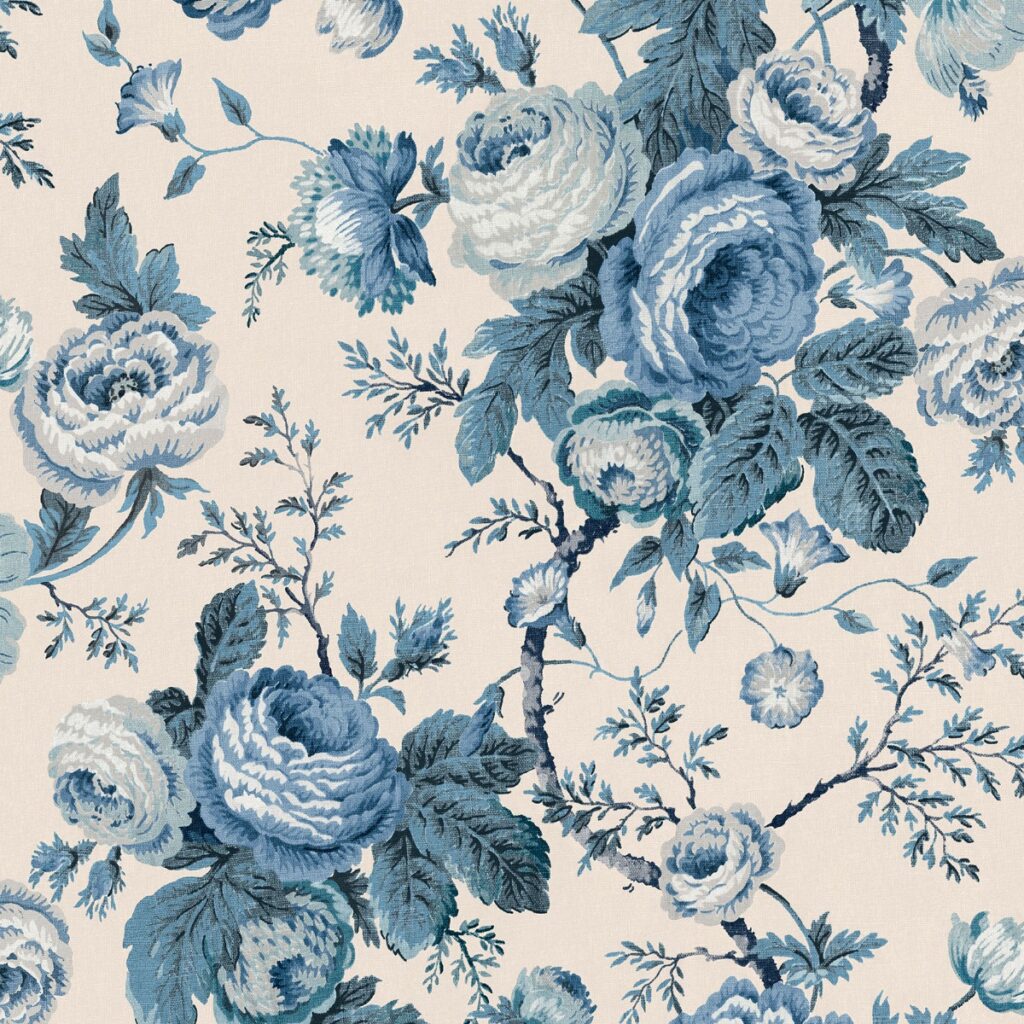
Floral wallpaper covers an enormous range of styles.
A delicate trailing flower on a pale background creates a completely different room from an oversized botanical design on navy, plum or forest green.
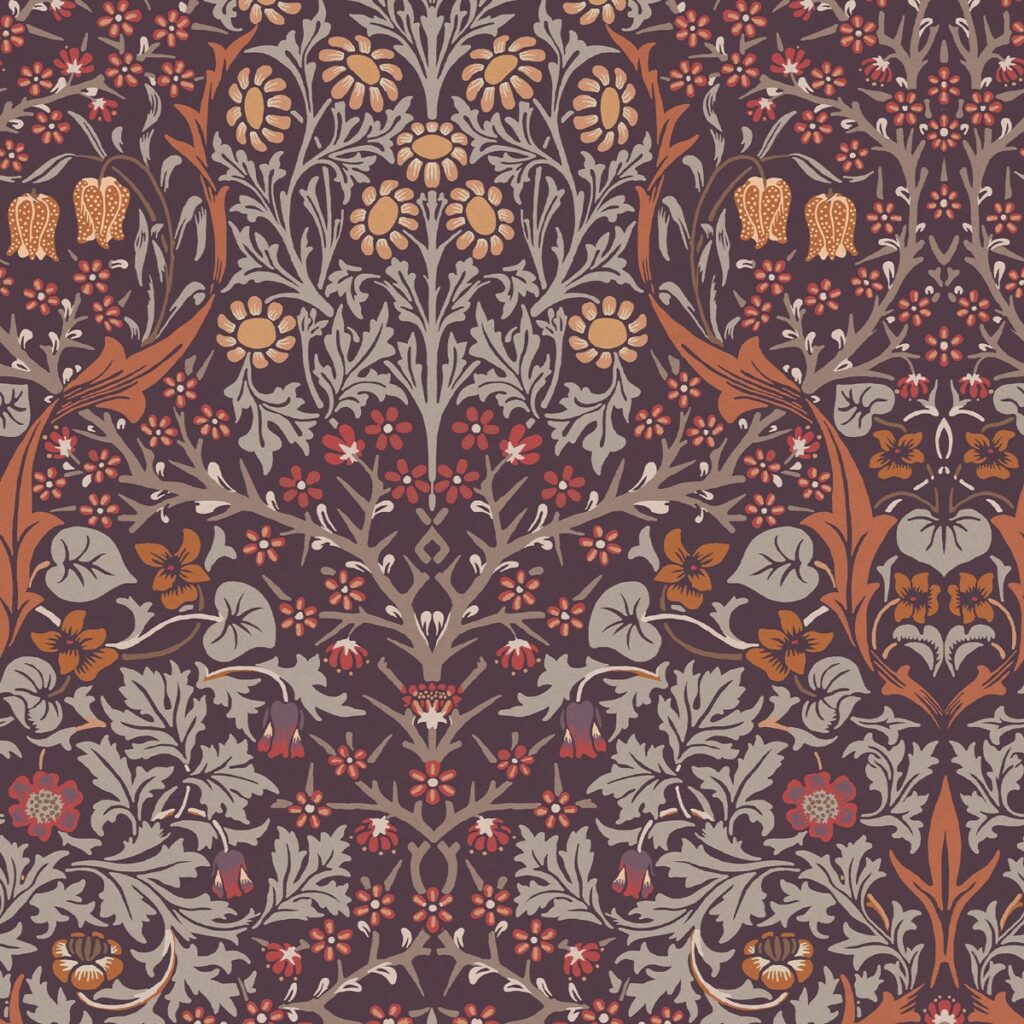
For a more traditional living room, look at repeating florals, Arts & Crafts designs and patterns inspired by historic textiles. They work particularly well with timber furniture, painted joinery and natural fabrics.
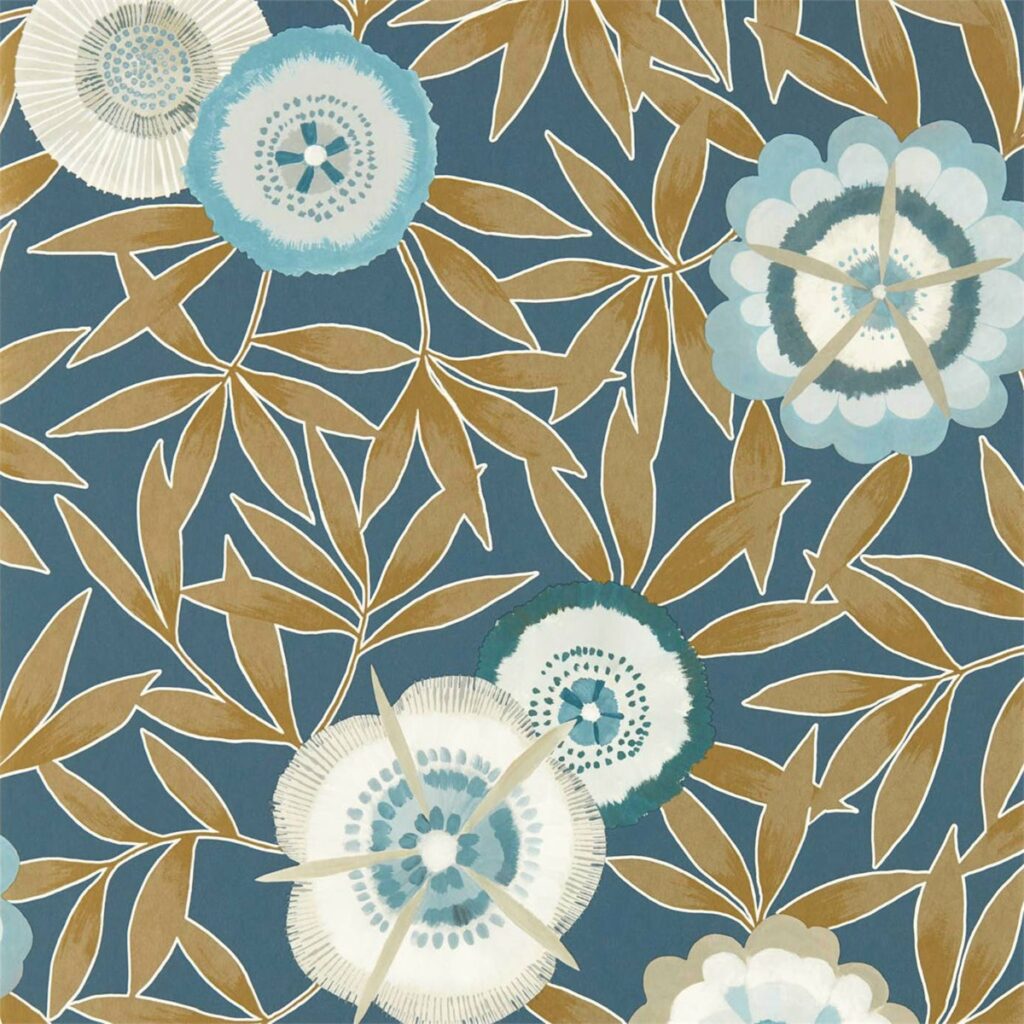
For something more contemporary, increase the scale. Large flowers and foliage can make a much stronger statement, particularly when the rest of the room is relatively simple.
You don’t necessarily need to choose between traditional and modern, either. A heritage-style wallpaper can look surprisingly fresh alongside contemporary furniture and lighting.
Explore floral and heritage wallpaper


3. Try green wallpaper for an easy-to-live-with room
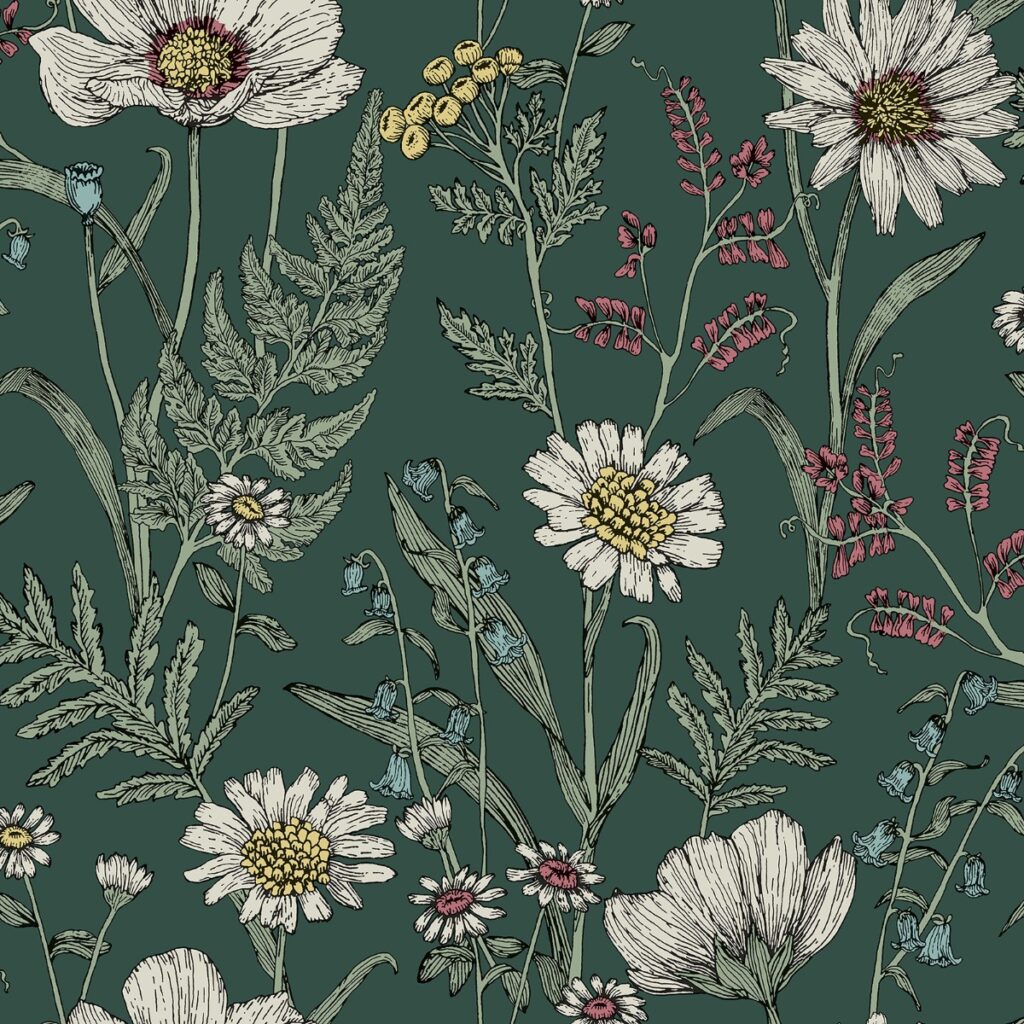
Green has become such a useful decorating colour because it can behave almost like a neutral.
Sage and muted olive work well where you want a relaxed background, while forest, emerald and deep botanical greens produce a much richer room.
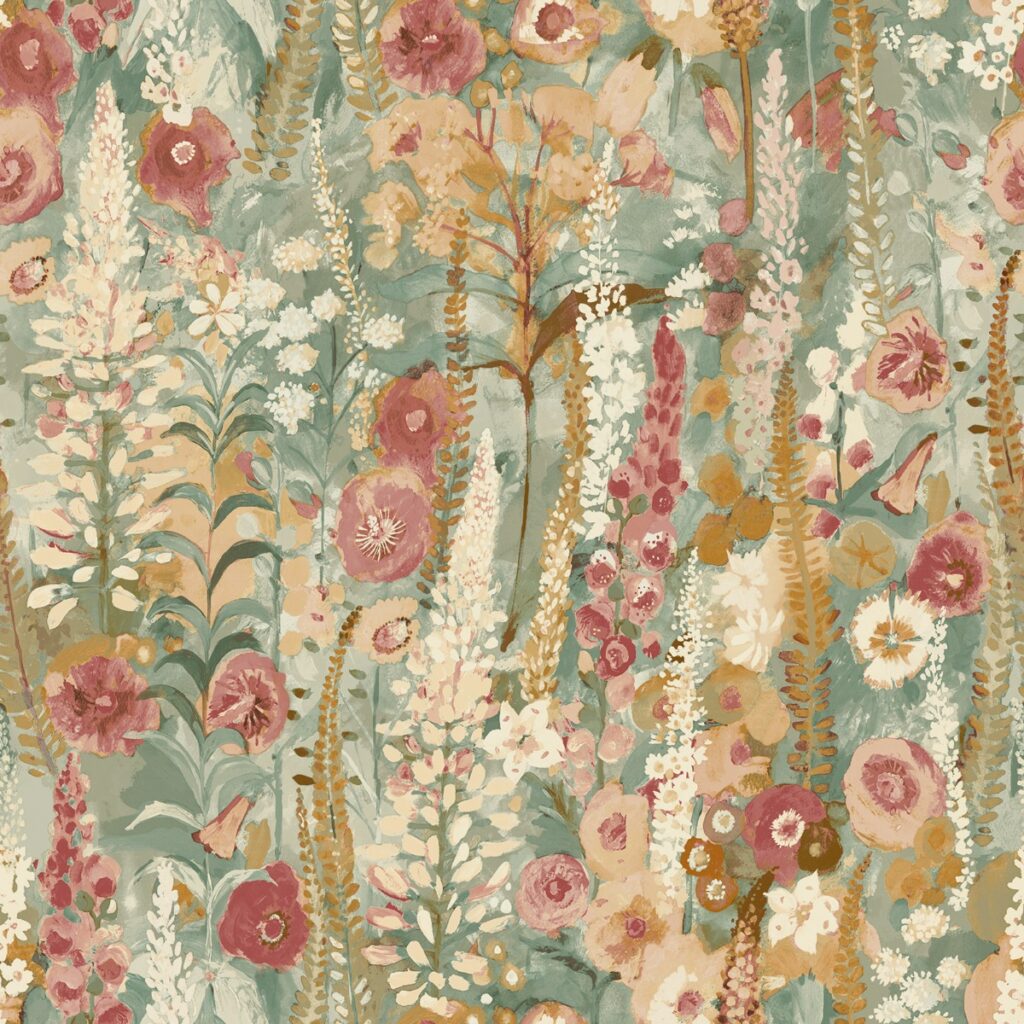
Green wallpaper also gives you plenty of options when choosing furniture. Natural timber, cream, tan leather and warm neutral upholstery are straightforward partners, while pink, rust, ochre and burgundy can introduce stronger contrasts.
If your living room looks onto a garden, botanical or leafy green wallpaper can also make the transition between indoors and outside feel less abrupt.
Explore green and botanical wallpaper



4. Don’t be frightened of dark wallpaper
A dark wallpaper doesn’t automatically make a living room gloomy.
Navy, charcoal, deep green, chocolate and plum can make a room feel warm and enveloping, particularly in the evening when table lamps and wall lights take over from daylight.
The amount of natural light still matters, but so does what you want from the room. A north-facing living room isn’t necessarily going to become bright and sunny because you put pale wallpaper in it. Sometimes working with its naturally subdued light produces a much more convincing result.
If you choose a dark wallpaper, pay attention to the other surfaces in the room. Warm timber, brass, colourful upholstery, artwork and well-positioned lighting can stop the scheme becoming heavy.
Explore dark and dramatic wallpaper

5. Make the fireplace part of the wallpaper scheme
A fireplace already gives a living room a natural centre, which makes it a useful starting point when deciding where wallpaper should go.
You could wallpaper just the chimney breast for a relatively contained splash of pattern.
Alternatively, reverse the idea: wallpaper the walls and paint the chimney breast in a colour taken from the pattern.
If you have alcoves either side, continuing wallpaper through them and around the room can create a more cohesive result than treating every architectural section differently.
The fireplace, wallpaper and paint should ideally look like parts of the same decorating scheme rather than three separate ideas competing for attention.
6. Consider a mural instead of a repeating pattern
A mural changes the role of wallpaper.
Rather than providing a repeating background, the wall becomes an image in its own right.
Landscapes, woodland scenes, oversized botanicals and decorative panoramic designs can work particularly well in living rooms because there is usually enough wall space to appreciate them from a distance.
The wall behind a sofa is an obvious location, although a mural can also work behind a dining area in an open-plan room.
Before ordering one, check the dimensions carefully. With a conventional repeating wallpaper you can simply add more rolls; with a mural, the relationship between the image and the dimensions of the wall is much more important.
Explore murals and statement wallpaper



7. Use wallpaper to zone an open-plan living room
Wallpaper can be useful where a living room shares space with a kitchen, dining room or home office.
Rather than putting up a physical divider, a change in wall treatment can give one part of the room its own identity.
For example, wallpaper around the seating area while keeping the adjoining kitchen walls painted. Or use a mural or stronger pattern around a reading corner or dining area.
The trick is to create distinction without making the different areas look unrelated. Repeating one or two colours from the wallpaper elsewhere in the larger space helps tie everything together.
8. Small living rooms can take more pattern than you might think
It is tempting to make every decorating decision in a small living room about making it look bigger.
That can lead to a room full of pale colours and very little character.
Pattern can actually work extremely well in a small space. A repeating design used on every wall can blur the boundaries of the room, while a vertical pattern can draw the eye upwards.
Scale matters, but there isn’t a rule that says small rooms require tiny patterns. A large-scale design can sometimes feel calmer because there are fewer repeats visible across the wall.
If you’re uncertain, order a sample and move it around the room during the day. Look at it beside the sofa, near the window and in the darkest corner rather than judging it in isolation.
9. Pick wallpaper colours from things you’re keeping
If the sofa, curtains, flooring and major pieces of furniture are staying, use them as the starting point.
It is much easier to find wallpaper that works with an existing sofa than to discover after decorating that your new walls fight with the most expensive piece of furniture in the room.
You don’t need an exact colour match.
Instead, look for a colour within the wallpaper that relates to something already in the room. A small rust detail might pick up a leather chair; a muted green leaf could connect with the curtains; a warm background might work with the tone of a timber floor.
This usually creates a more natural-looking room than trying to match everything precisely.
10. Let the scale of the pattern change the mood
Two wallpapers in exactly the same colours can feel completely different because of the size of their patterns.
Small repeats tend to create a more continuous background and can be easier to use across several walls.
Larger patterns demand more attention. They can be excellent behind a sofa, around a fireplace or throughout a room where you deliberately want the wallpaper to dominate.
Before buying, check the pattern repeat as well as the photograph online. It will help you understand both how large the design really is and how much wallpaper you are likely to need.
11. Try stripes when you want pattern without florals
Not everyone wants flowers, leaves or elaborate motifs on the wall.
Striped wallpaper introduces pattern in a much simpler way and works with both traditional and contemporary interiors.
Fine stripes can provide subtle background detail, while broader stripes make much more of a statement. Vertical stripes naturally emphasise the height of a wall and can be particularly useful in rooms with lower ceilings.
Stripes are also easy to combine with patterned cushions, rugs and upholstery because the design itself is relatively ordered.
12. Use texture when you want quieter walls
Sometimes the colour is right but a completely plain painted wall still feels a little flat.
This is where textured and texture-effect wallpapers come into their own.
Grasscloth effects, linen looks, hessian textures and subtly uneven finishes introduce detail without demanding the attention of a large pattern.
They can be particularly effective in living rooms with artwork, statement furniture or patterned upholstery where another strong decorative element would be too much.
Which wallpaper is best for a living room?
Start with the room rather than simply following the latest trend. If you’re looking for ideas about what’s changing, we’ve also looked at the wallpaper trends for 2027.
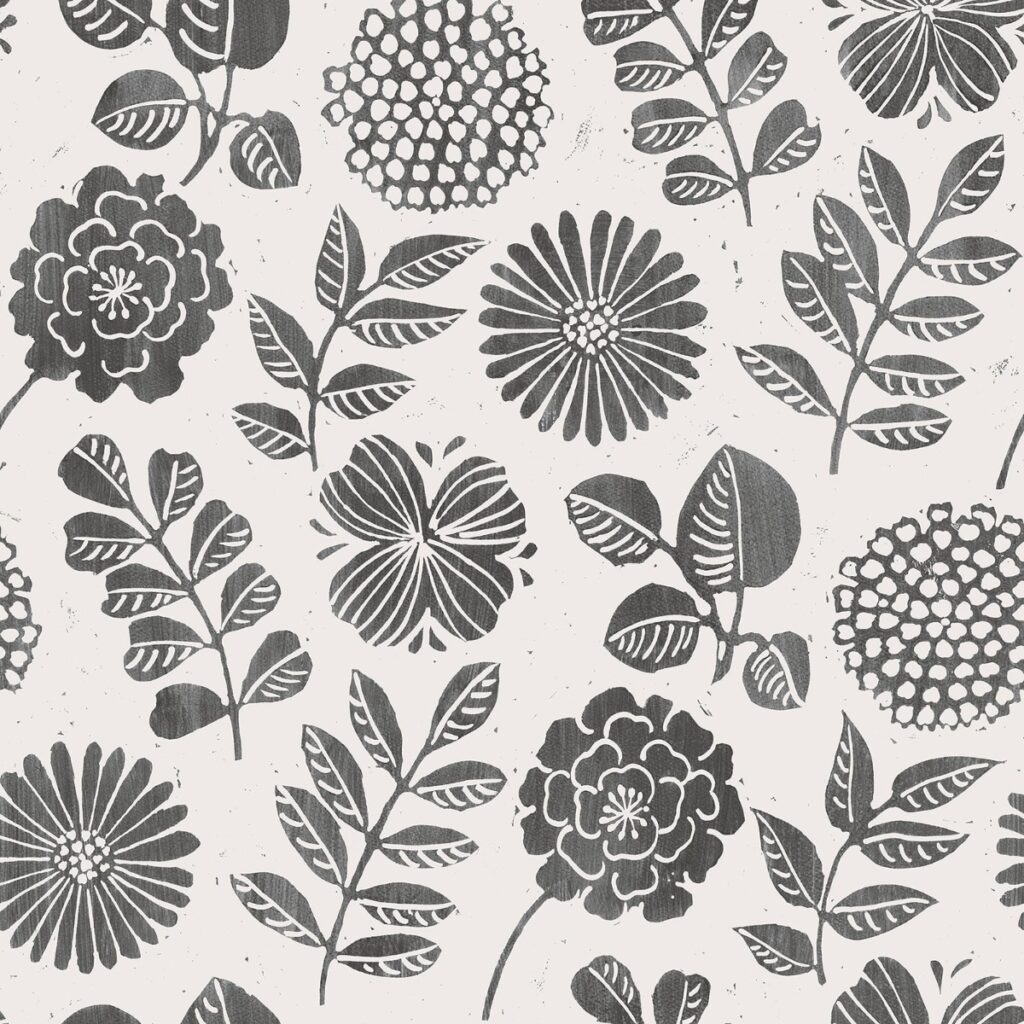
For a light, relaxed living room, consider soft botanicals, subtle florals, stripes and textured wallpapers.
For something warmer and more traditional, look at heritage patterns, Arts & Crafts designs and richer earthy colours.
If you want drama, darker florals, oversized botanicals and murals can completely change the character of the room.
And if you already have colourful furniture or artwork, a quieter textured or small-repeat wallpaper may be all the room needs.
The important question isn’t whether a wallpaper is fashionable. It’s whether you will enjoy living with it when the room is being used normally – on a grey afternoon, with the lamps on in the evening, and with all your furniture and possessions back in place.
Before you order
Once you’ve found a wallpaper you like, order a sample if one is available.
Tape it to the wall and leave it there for a few days. Look at it in morning light, artificial light and alongside the furniture that will remain in the room.
Then measure carefully and check the pattern repeat before calculating how many rolls you need.
A little time spent at this stage is much easier than discovering halfway through decorating that the colour, scale or quantity isn’t quite right.
 Wallpaper Trends 2027: Colours, Patterns & Styles to Watch