
If you’re thinking about redecorating in 2027, wallpaper is certainly giving you plenty to choose from.
After several years when many interiors were dominated by pale neutrals and relatively restrained decoration, things are getting more interesting. We’re seeing richer colours, more pattern, decorative florals, landscapes and plenty of designs that aren’t afraid to make themselves noticed.
There is also a renewed interest in the past. Chintz, Arts & Crafts patterns and other traditional designs are finding their way into contemporary homes, often alongside very modern furniture and colour schemes.
Of course, there’s a difference between spotting a trend and suggesting that everyone should follow it. Wallpaper can stay on a wall for years, so liking a design matters considerably more than whether it’s fashionable.
With that in mind, we’ve looked at new collections, colour forecasts and what’s happening across interiors to pick out the wallpaper trends we think are worth watching in 2027.
What are the biggest wallpaper trends for 2027?
The strongest wallpaper trends emerging for 2027 include heritage florals and chintz, warmer earthy colours, dark and atmospheric schemes, bolder botanical designs, Chinoiserie, textured wallcoverings and large-scale murals. We’re also seeing traditional patterns such as Arts & Crafts designs used in increasingly contemporary interiors.
There is plenty of crossover between them. A dark green botanical, for example, manages to tick several boxes at once.
Here’s a closer look.
1. Heritage florals and chintz return
Floral wallpaper never really disappeared, but its character is changing.
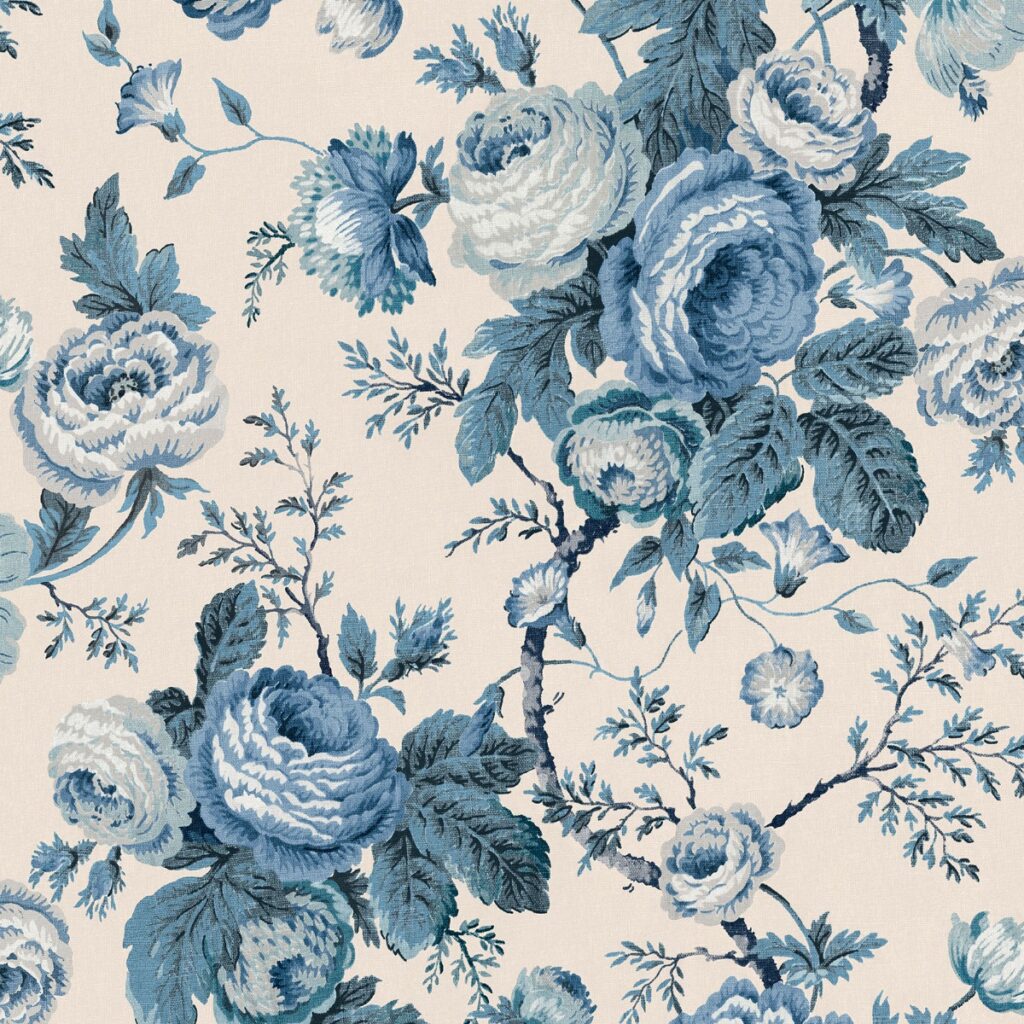
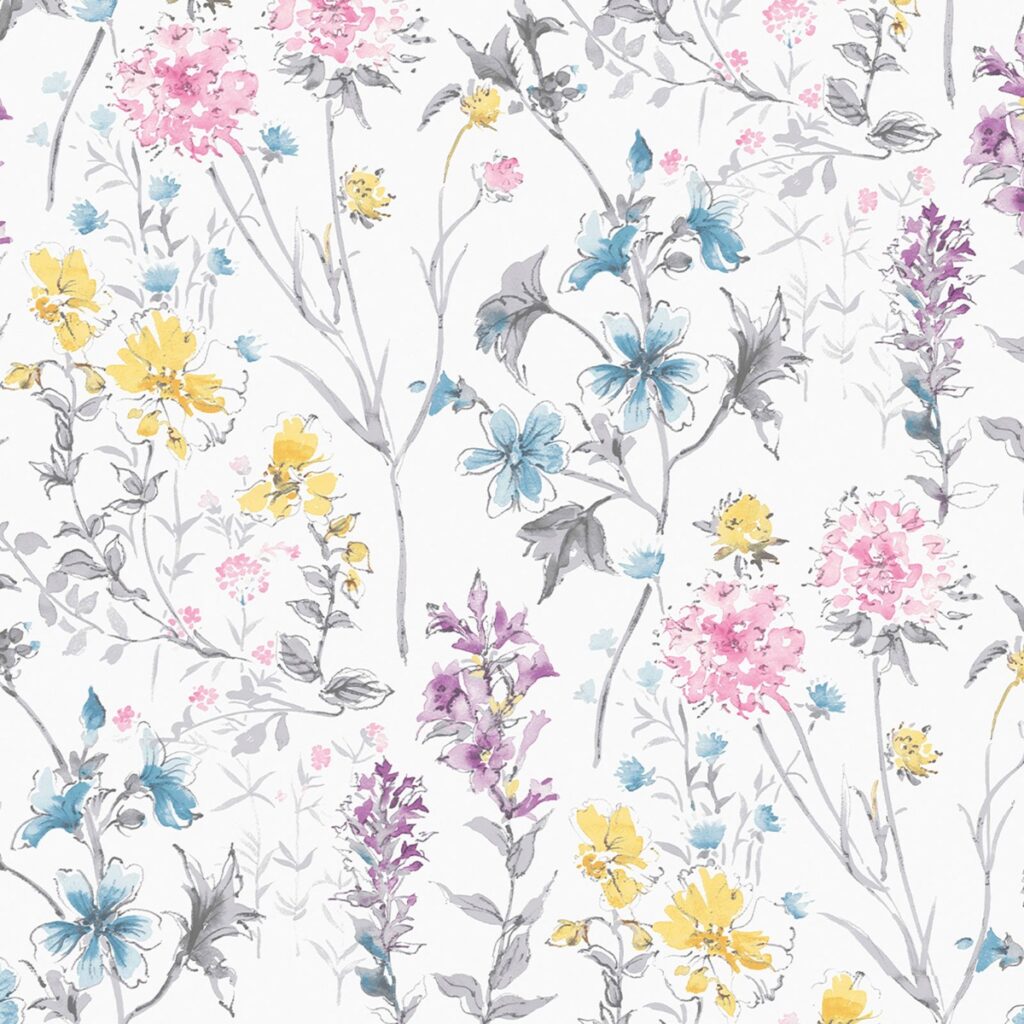
For 2027 we’re seeing greater interest in decorative florals with a sense of history: trailing flowers, foliage, chintz-inspired patterns and designs that wouldn’t necessarily have looked out of place in an older country house.
One fairly clear indication of this is Graham & Brown’s choice of Roselle Grove as its Design of the Year for 2027. The hand-painted pattern draws on the history of Indian chintz and its later influence on European and British interiors.
The interesting part isn’t simply that floral wallpaper is popular again. It’s how these traditional-looking patterns are being used.
A heritage floral doesn’t require a room full of antique furniture. In fact, some of the most successful schemes use an old-fashioned pattern against simpler furniture, contemporary lighting or an unexpected paint colour.
If covering an entire living room in flowers feels a little daunting, a bedroom, cloakroom or one smaller space can be a good place to experiment.
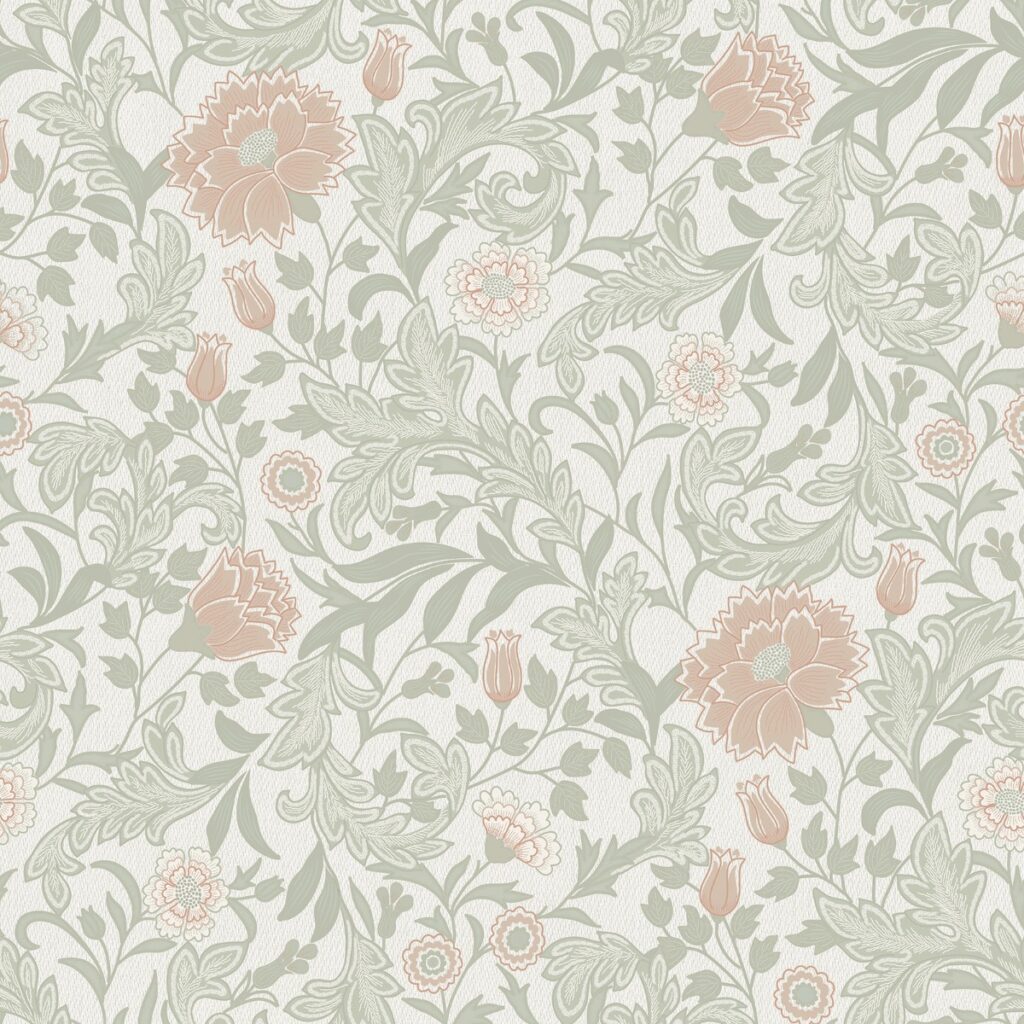
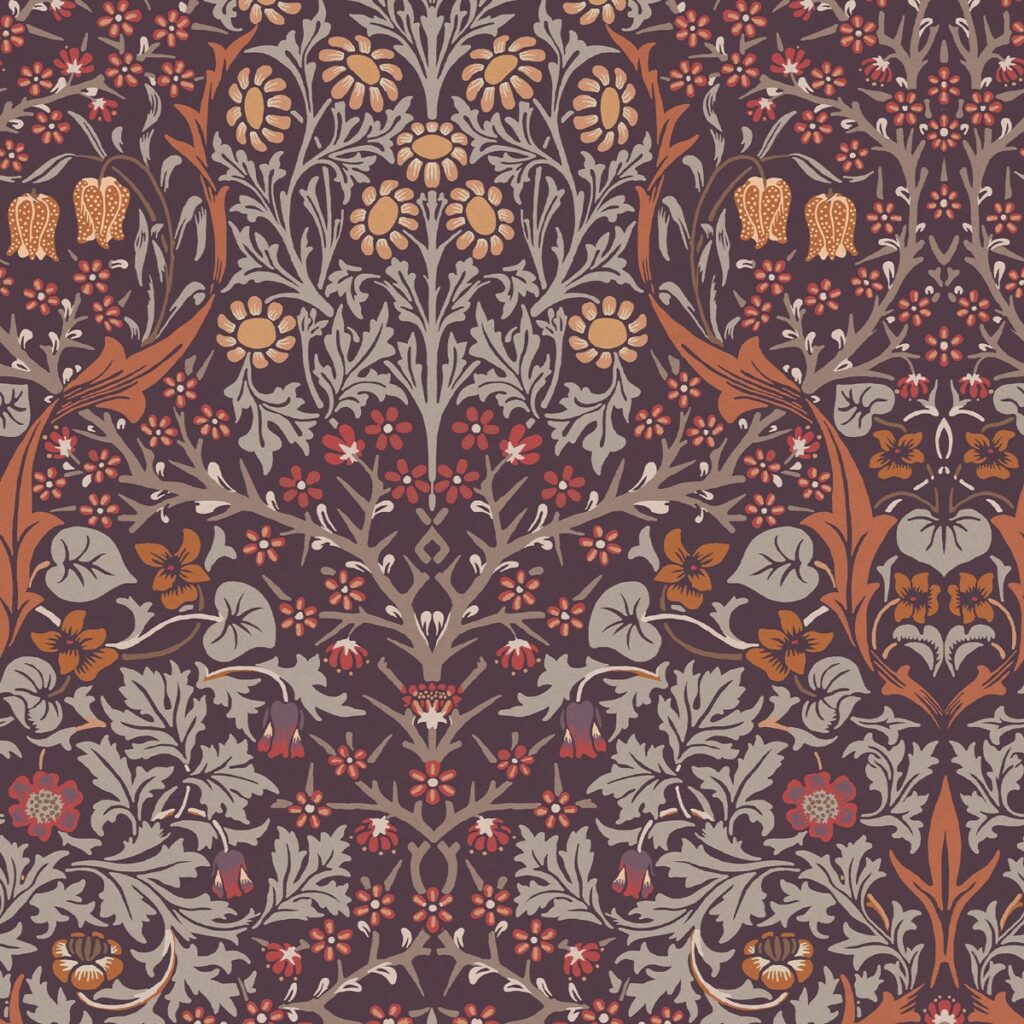
And if you already like William Morris wallpaper and Arts & Crafts designs, 2027 should provide plenty to tempt you.
Explore heritage and floral wallpaper
2. Wallpaper colours are becoming warmer and earthier
Cool grey has had a very long innings.
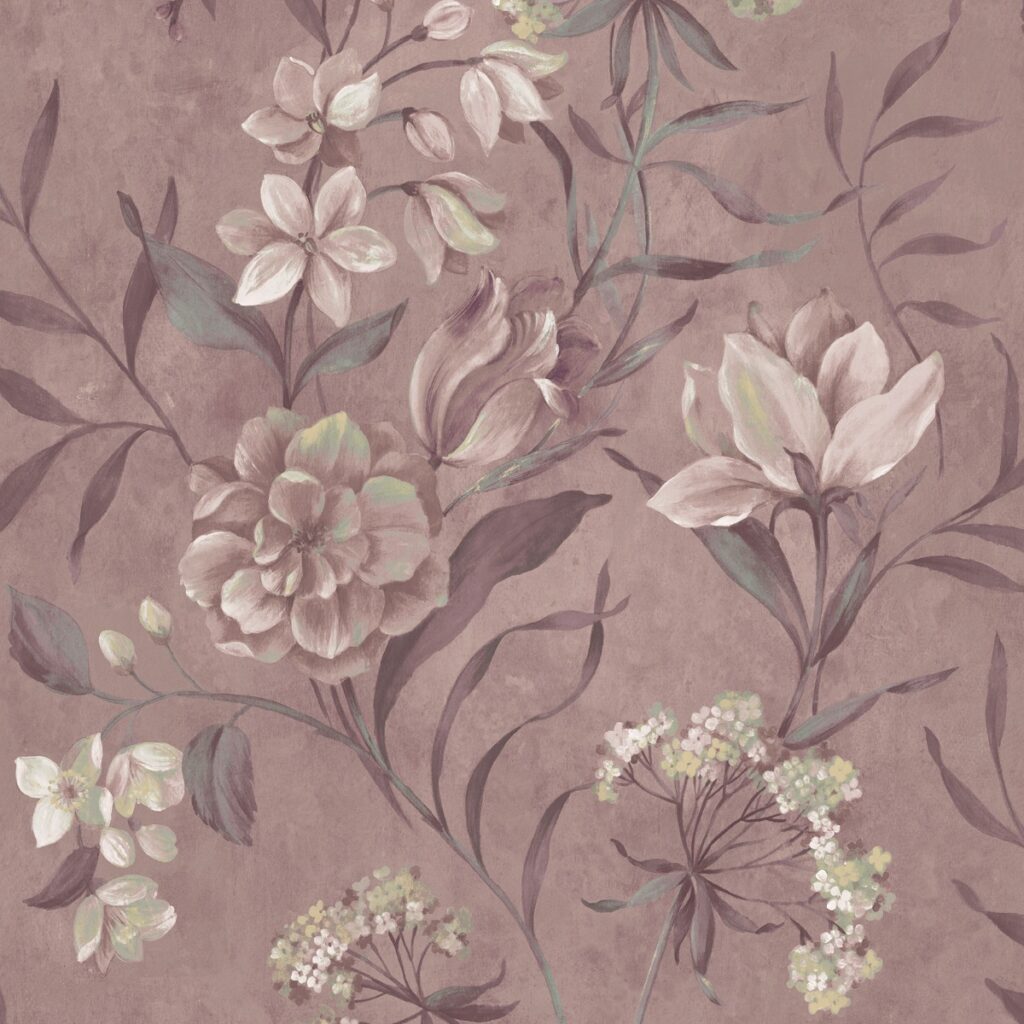
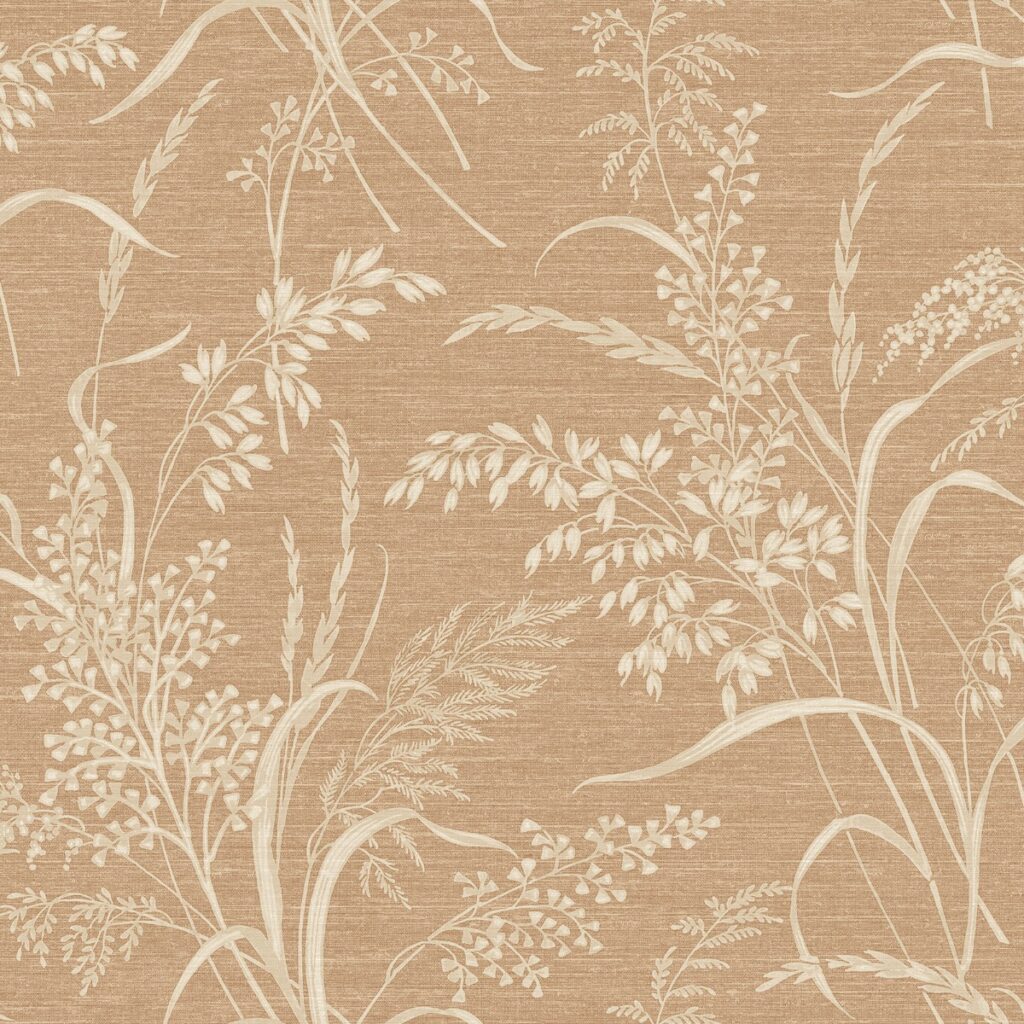
For 2027, the more interesting colour stories are warmer: clay, terracotta, brown, dusky pink, olive, ochre and warm cream, together with deeper shades that make rooms feel comfortable rather than stark.
Graham & Brown has chosen Rose Earth as its 2027 Colour of the Year, an earthy pink inspired by natural mineral pigments. Little Greene’s new Marle is a soft, earthy mid-brown with a warm, muted character.
Two colours don’t make a universal rule, but they do fit a broader move towards interiors that feel warmer, softer and less clinical.
For wallpaper, this doesn’t mean that every room is about to turn brown. It may simply mean choosing a floral on a warm cream ground rather than bright white, an olive green rather than a cooler shade, or a muted terracotta stripe instead of grey.
These colours are also relatively easy to live with because they work well alongside natural materials such as timber, stone, linen and rattan.
If you’ve spent the last decade surrounded by grey, 2027 might be the year to introduce a little warmth.
Explore warm and earthy wallpaper

3. Dark wallpaper moves beyond the feature wall
There was a time when decorating advice for a small or dark room almost invariably involved painting everything white.
Thankfully, things have moved on.
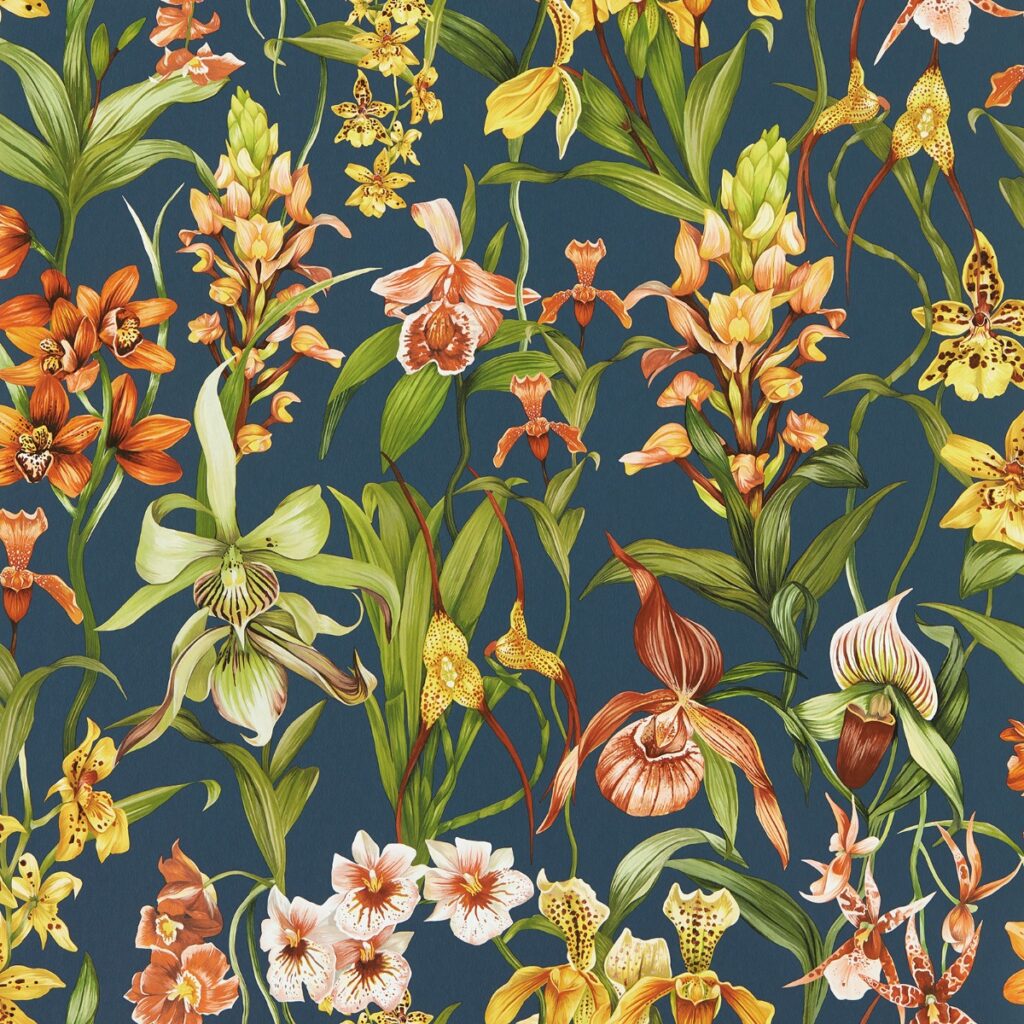
Deep greens, navy, charcoal, burgundy and other darker shades can create rooms that feel intimate and inviting rather than simply small. Wallpaper adds another dimension because pattern prevents a dark colour from becoming a single heavy block.
Dark wallpaper can work particularly well in bedrooms, dining rooms, snugs and cloakrooms. It can also be surprisingly effective in a hallway, where there may be little natural light to preserve in the first place.
The important thing is to think about the whole room.
A charcoal botanical combined with dark flooring and heavy furniture will feel very different from the same wallpaper alongside a pale ceiling, warm timber, mirrors and good lighting.
You don’t necessarily have to restrict a dark pattern to one feature wall either. Used on every wall, a rich design can make a room feel deliberate and enveloping.
If you’re nervous about trying it in a living room, the downstairs loo remains an excellent testing ground for decorating bravery.
Explore dark and dramatic wallpaper
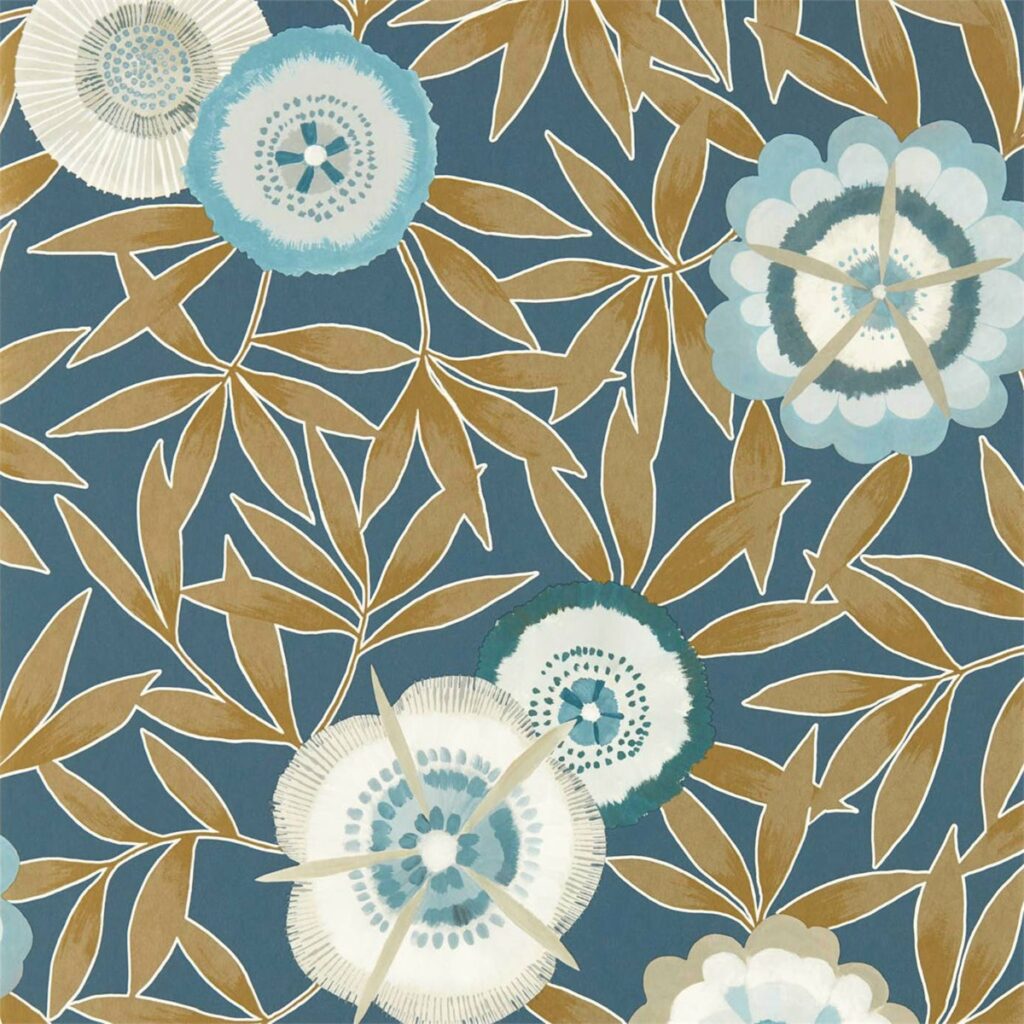
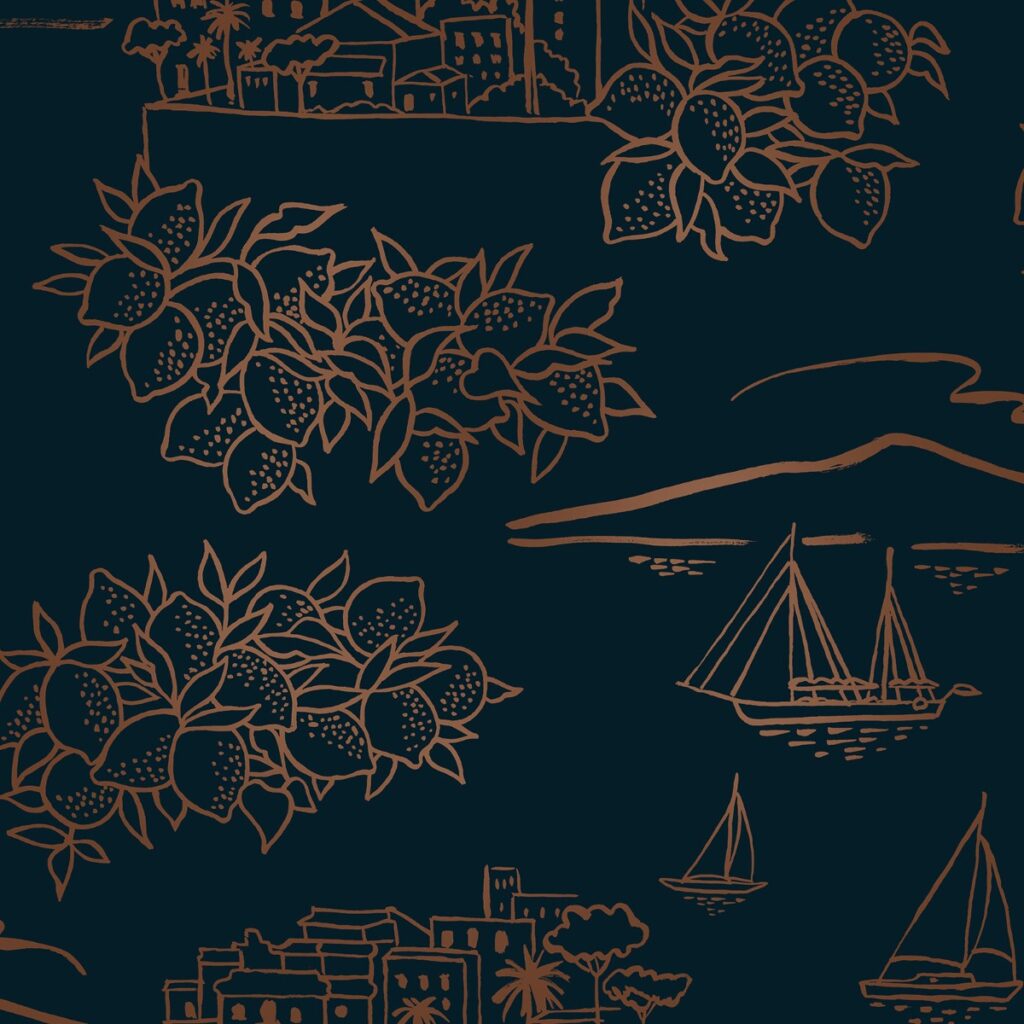
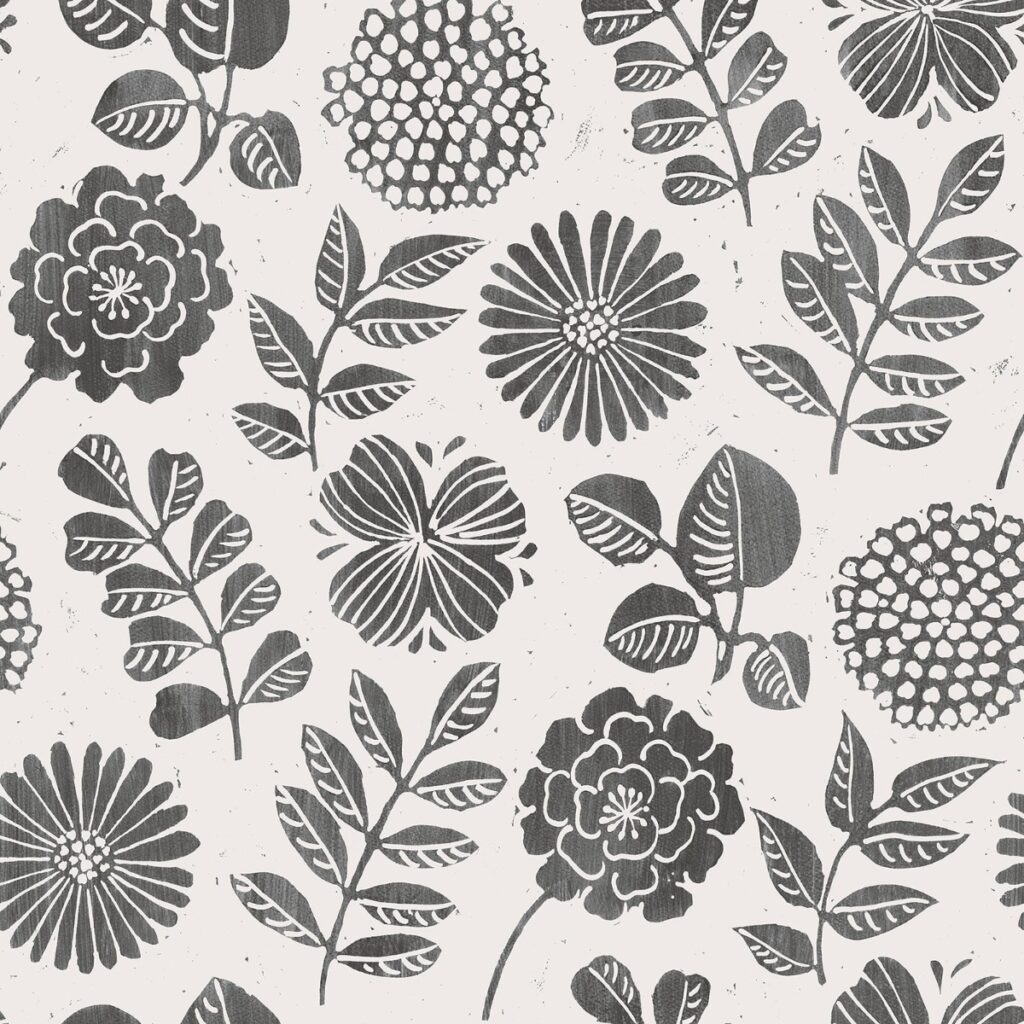
4. Botanicals get bolder and wilder
Botanical wallpaper is hardly a new trend. Leaves, flowers and trees have been appearing on walls for centuries.
What does appear to be changing is the scale and mood.
Alongside delicate botanical drawings we’re seeing denser foliage, woodland scenes, oversized leaves, tropical vegetation, birds and more expressive interpretations of the natural world.
This can make botanical wallpaper surprisingly versatile.
Soft foliage on a light background can make a bedroom feel restful, while a dense forest pattern can completely change the atmosphere of a dining room or hallway. Tropical leaves introduce a very different character again.
Scale matters here.
A large botanical pattern can actually work extremely well in a small room because you see more of the design rather than an endless repeat of tiny motifs. In a larger room, consider how the pattern will look from across the space as well as close to the wall.
If you like the idea of bringing the garden indoors but don’t particularly fancy decorating with flowers, leaves, trees, ferns and woodland patterns offer plenty of alternatives.
For more ideas, our guide to botanical and nature-inspired wallpaper looks in more detail at choosing pattern, colour and scale for different rooms.
5. Chinoiserie brings birds, blossom and landscape to the wall
Chinoiserie is another decorative style receiving renewed attention.
The term describes a European interpretation of Chinese and East Asian decorative art which became particularly fashionable from the 17th and 18th centuries onwards. In wallpaper, that often means elegant branches, blossom, birds, pagodas and garden or landscape scenes.
It can be wonderfully decorative without necessarily being overwhelming.
Traditional Chinoiserie papers can suit period properties beautifully, but the style doesn’t have to be treated as historical decoration. A detailed bird-and-branch pattern can look striking alongside contemporary furniture and relatively simple accessories.
Colour changes its character dramatically too. Soft blue, cream or green can make the effect gentle and elegant; a black or richly coloured background creates much more drama.
Hallways, bedrooms and dining rooms are particularly good places to consider it.
6. Texture matters as much as pattern
Not everyone wants flowers, birds or enormous leaves on their walls.
One of the more useful wallpaper directions for 2027 is the continuing interest in texture.
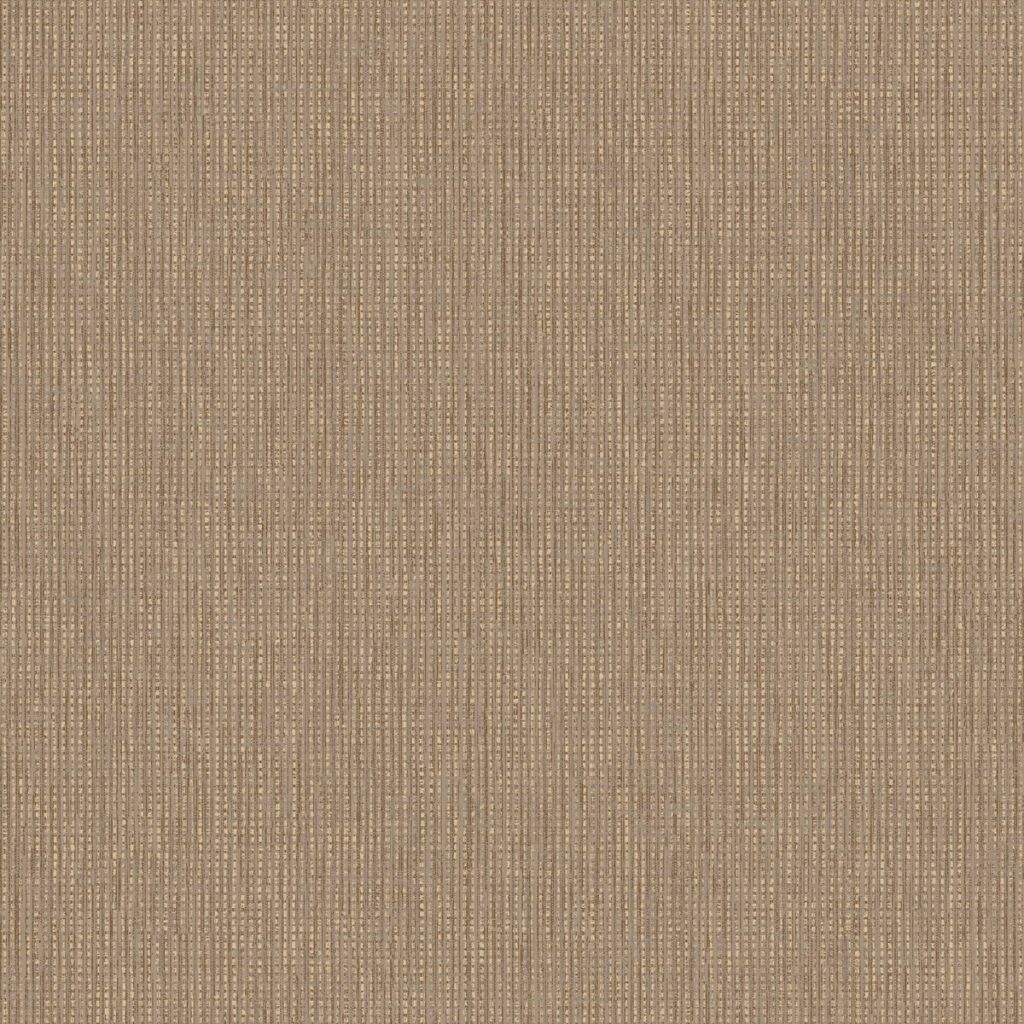
Grasscloth, linen effects, hessian, plaster-like finishes and subtly raised papers add something to a room without introducing an obvious repeating pattern.
This can be particularly effective in living rooms and bedrooms where a painted wall might feel a little flat but a strong patterned wallpaper would be too much.
Texture also changes with the light. A paper with a woven or raised surface can look quite different in morning daylight and under lamps in the evening.
Real grasscloth and natural wallcoverings have their own characteristics and installation requirements, but there are also plenty of wallpapers designed simply to recreate the look.
For anyone who likes relatively simple interiors, this may be one of the easiest 2027 trends to live with for the long term.
7. Walls become artwork
Wallpaper doesn’t always have to be a repeating pattern.
Murals and panoramic wallpapers have been growing in popularity, and the designs are becoming increasingly sophisticated. Landscapes, gardens, forests, abstract paintings and oversized florals can turn a whole wall into something closer to a piece of artwork.
Graham & Brown’s 2027 Mural of the Year, Red Rose County, is a good example. Inspired by the Lancashire landscape, it uses a panoramic scene rather than a conventional small repeat.
Murals naturally work as a focal point, so they can be particularly effective behind a bed, in a dining area or on a large uninterrupted living-room wall.
The trick is giving the design enough room to breathe. A beautiful landscape partly hidden by tall cupboards and shelving is unlikely to have quite the intended effect.
This is also one area where measuring carefully before ordering really matters.
8. Traditional patterns find their way into modern rooms
Perhaps the most interesting trend isn’t a particular colour or pattern at all.
It’s the loosening of the old rules about what belongs with what.
William Morris wallpaper doesn’t require a Victorian house. A stripe doesn’t have to be nautical. Florals don’t need matching floral curtains, and an Arts & Crafts design can sit perfectly happily beside contemporary furniture.
This makes traditional wallpaper considerably easier to use.
Rather than trying to recreate an entire historical interior, you can take the part you like — perhaps a Morris pattern or decorative floral — and allow everything around it to be simpler.
There is also scope to mix patterns. A floral wallpaper and striped upholstery can work beautifully together when they share one or two colours, although it helps to vary the scale rather than making every pattern compete equally for attention.
This mixture of old and new is likely to be one of the most enduring decorating ideas on this list because it isn’t dependent on buying an entirely new look.
Which 2027 wallpaper trend is right for your room?
Trends are much easier to understand when you stop thinking about what’s fashionable and start with the room you’re actually decorating.
| If you want… | Consider… |
|---|---|
| A calm, comfortable bedroom | Soft botanical, warm neutral or textured wallpaper |
| A dramatic dining room | Dark floral, Chinoiserie or heritage pattern |
| A memorable hallway | Bold botanical, decorative floral or Chinoiserie |
| Character in a period home | William Morris, Arts & Crafts or heritage floral |
| Interest without a strong pattern | Grasscloth, linen effect or textured wallpaper |
| A small room with personality | Rich colour or a larger-scale pattern |
| A striking focal point | Scenic wallpaper, mural or oversized botanical |
| A warmer living room | Olive, terracotta, brown or warm neutral wallpaper |
These aren’t rules. A dark floral can make a wonderful bedroom and a quiet textured paper can work perfectly well in a hallway.
It’s simply worth starting with the atmosphere you want to create rather than the trend you think you ought to follow.
Decorating a living room? See our living room wallpaper ideas for advice on choosing colours, patterns, feature walls and murals.
What about the feature wall?
The feature wall hasn’t disappeared.
Although we’re seeing more wallpaper used across all four walls, there are still plenty of situations where using it on one wall makes sense.
A large-scale pattern can highlight a fireplace or the wall behind a bed. A mural generally needs a single uninterrupted surface. And if you’ve fallen for an expensive wallpaper, using less of it is an entirely reasonable decorating strategy.
On the other hand, automatically putting wallpaper on one wall because you’re frightened of using it elsewhere can sometimes make a room feel unfinished.
Before deciding, look at the pattern itself and the shape of the room.
Some designs need space around them. Others become much more convincing when they wrap around corners and surround you.
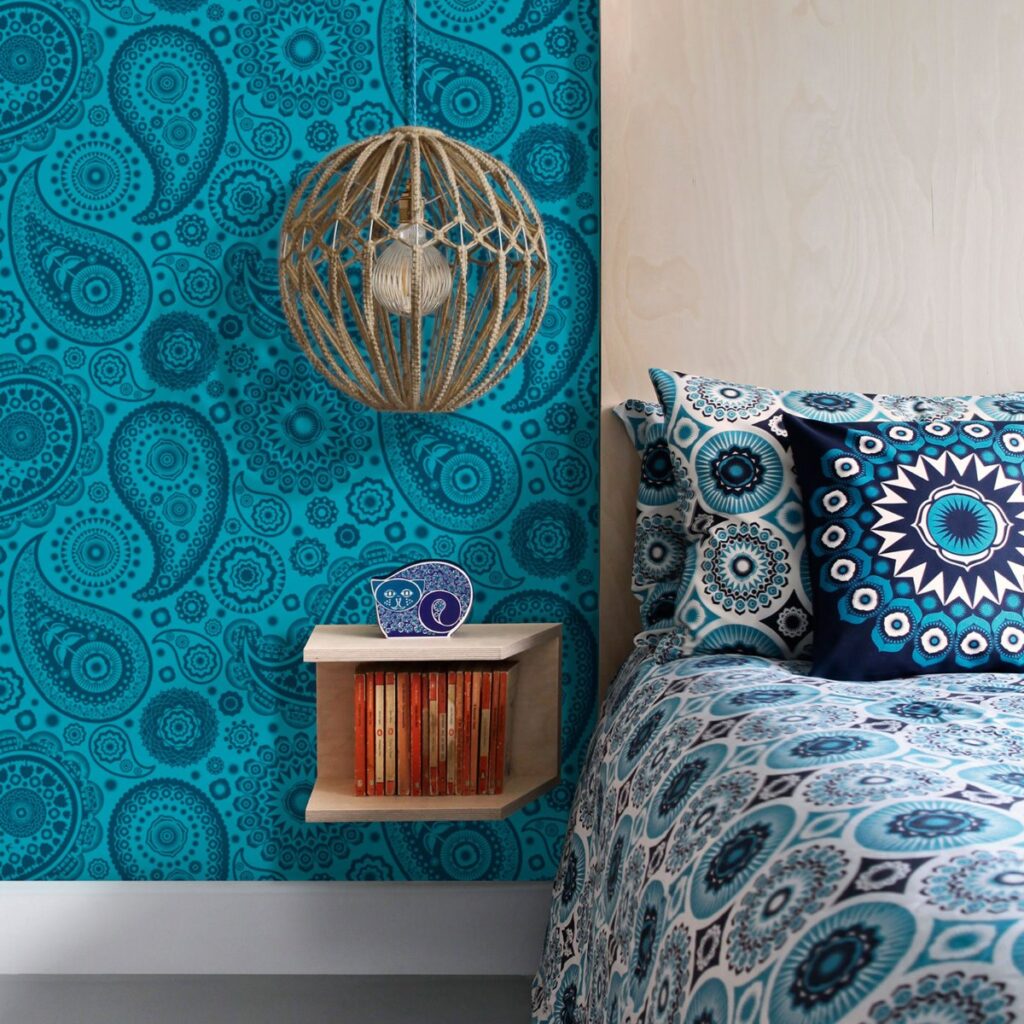
How to choose a wallpaper trend you’ll still like in five years
This is perhaps the most important bit.
Don’t choose wallpaper because somebody has declared it fashionable.
Wallpaper is more commitment than buying a fashionable cushion. You’ll see it every morning, and removing it again involves rather more effort than putting a cushion in a cupboard.
If one of the 2027 trends appeals to you, work out what it is that you actually like about it.
If it’s the warmth of the new earthy colours, you don’t necessarily need the latest pattern. Look for a wallpaper in olive, clay, warm pink or brown that you genuinely love.
If it’s the return of heritage design, explore William Morris, Arts & Crafts, chintz and traditional florals until you find something that suits your home.
And if you love botanicals but aren’t remotely interested in whether they’re fashionable in 2027, that’s probably an even better reason to put one on your wall.
The best wallpaper is still the one you’re pleased to come home to.
 Botanical & Nature-Inspired Wallpapers: Expert Design Insights for UK Homeowners