
Bedrooms give you a little more freedom with wallpaper than almost any other room in the house.
They are personal spaces, usually seen by fewer people than living rooms or hallways, so you can choose something because you like it rather than worrying quite so much about what everybody else will think.
That doesn’t mean every bedroom needs to be calm, pale and understated. For some people, that is exactly the right approach. For others, deep colour, large flowers or a dramatic mural can make a bedroom feel much more inviting.
The important thing is to think about how the wallpaper will work with the bed, furniture, lighting and size of the room – and whether you want to wake up surrounded by pattern or simply use it to create one focal point.
If you’re decorating elsewhere too, see our living room wallpaper ideas for a room where furniture, fireplaces and feature walls create a different set of choices.
Here are some bedroom wallpaper ideas to get you started.
1. Start with the wall behind the bed
If you want wallpaper on just one wall, behind the bed is often the most natural place to put it.
The bed is already the main piece of furniture in most bedrooms, so wallpaper can help frame it and give the room a clear focal point.
This also gives you more freedom to choose a stronger pattern. When you’re lying in bed, the wallpaper isn’t directly in front of you, so an adventurous design can be easier to live with here than on the opposite wall.
You don’t necessarily need a large headboard either. A strong wallpaper can do much of the visual work itself.
Before committing, stand at the bedroom door and look at the wall as somebody entering the room would see it. If another wall dominates the view, that may actually be the better place for your wallpaper.
2. Or forget the feature wall and wallpaper the whole room
A bedroom can be an excellent place to use wallpaper on all four walls.
Smaller repeating patterns, soft botanicals and traditional designs can become surprisingly restful when they continue around the room rather than stopping abruptly after one wall.
The result can feel warmer and more enveloping too, particularly in bedrooms that you mainly use in the evening.
If you’re worried that pattern on every wall will be overwhelming, look for a design with a limited colour palette or a relatively quiet background.
You can then introduce larger areas of plain colour through the bedding, curtains, carpet and furniture.
3. Choose colours you actually find restful
There is no universal definition of a relaxing bedroom colour.
Soft greens, dusty blues, warm neutrals and muted pinks are popular for good reason, but that doesn’t mean your bedroom has to be pale.
Deep green, navy, burgundy, plum and chocolate can create bedrooms that feel cosy rather than gloomy, particularly when combined with warm bedside lighting and natural materials.
Think about when you use the room as well as how it looks in daylight.
A wallpaper that appears quite dark on a sample may look wonderfully rich beside a warm bedside lamp in the evening. Equally, a very cool grey or blue can sometimes feel colder than expected in a north-facing bedroom.
Tape a sample to the wall and look at it in the morning, afternoon and after dark before making the final decision.
Explore calming bedroom wallpaper
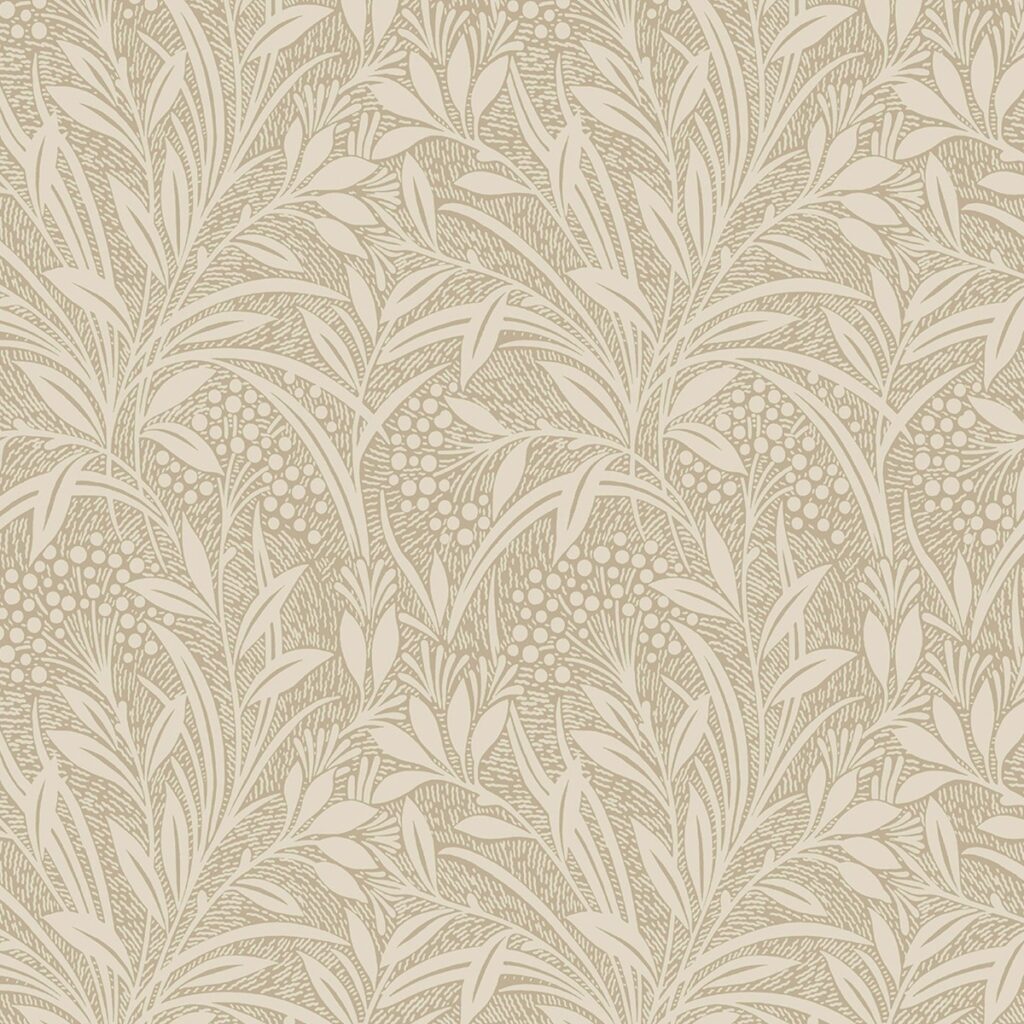


4. Bring nature into the bedroom with botanical wallpaper
Leaves, flowers, trees and other nature-inspired patterns are particularly easy to use in bedrooms.
For a quieter scheme, look for delicate foliage, trailing leaves or botanical patterns in soft greens and neutrals.
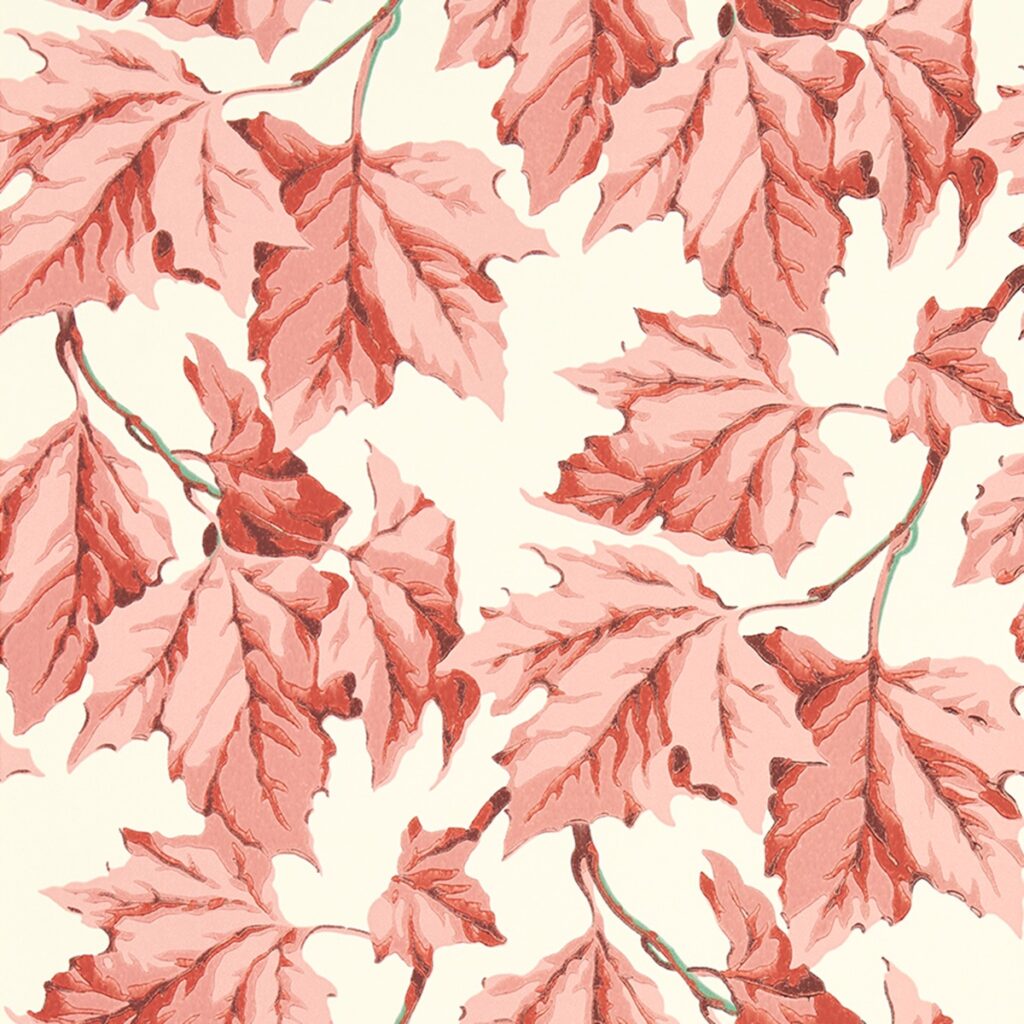
If you want more impact, try oversized leaves, woodland designs or darker botanicals with deep green, blue or black backgrounds.
Botanical wallpaper also works well with materials commonly found in bedrooms: timber furniture, linen bedding, rattan, wool and natural flooring.
You don’t have to make everything else botanical. Often the wallpaper works best when the rest of the room is kept relatively simple.
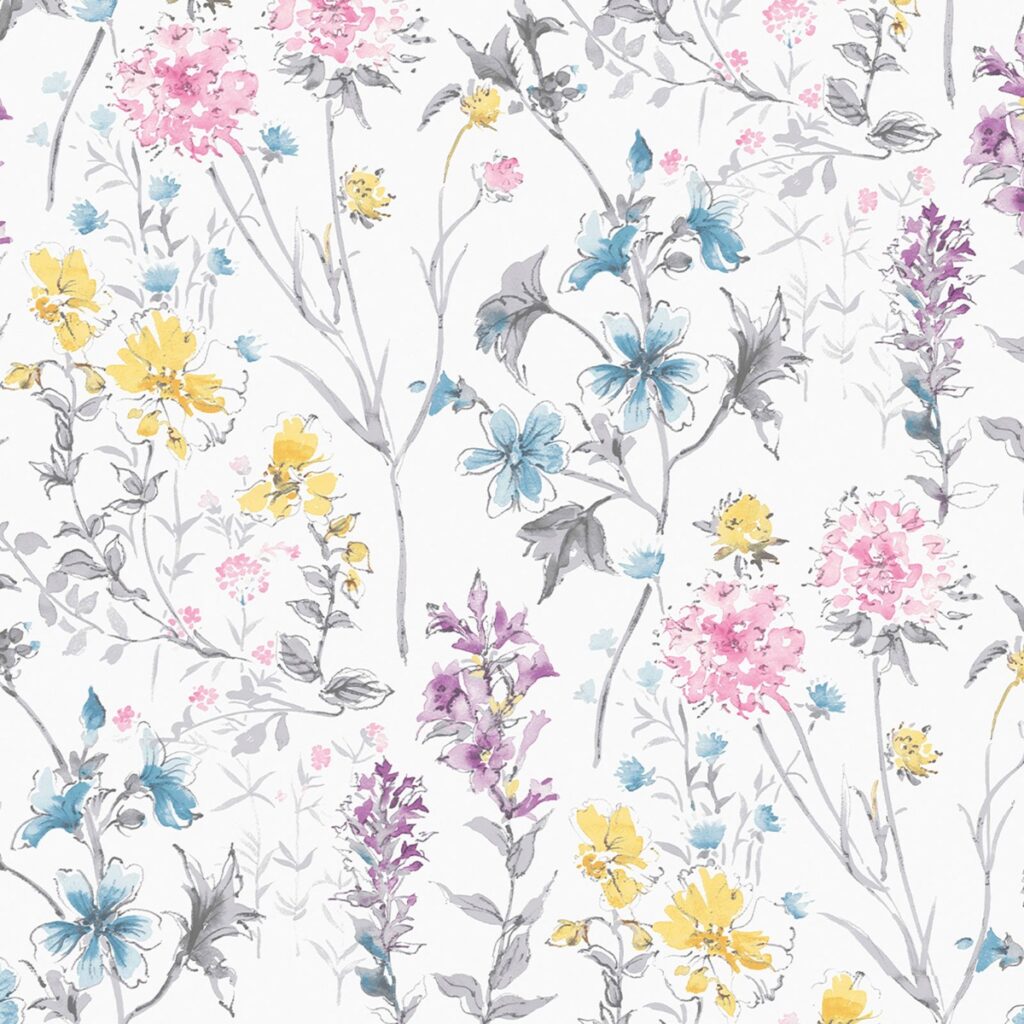
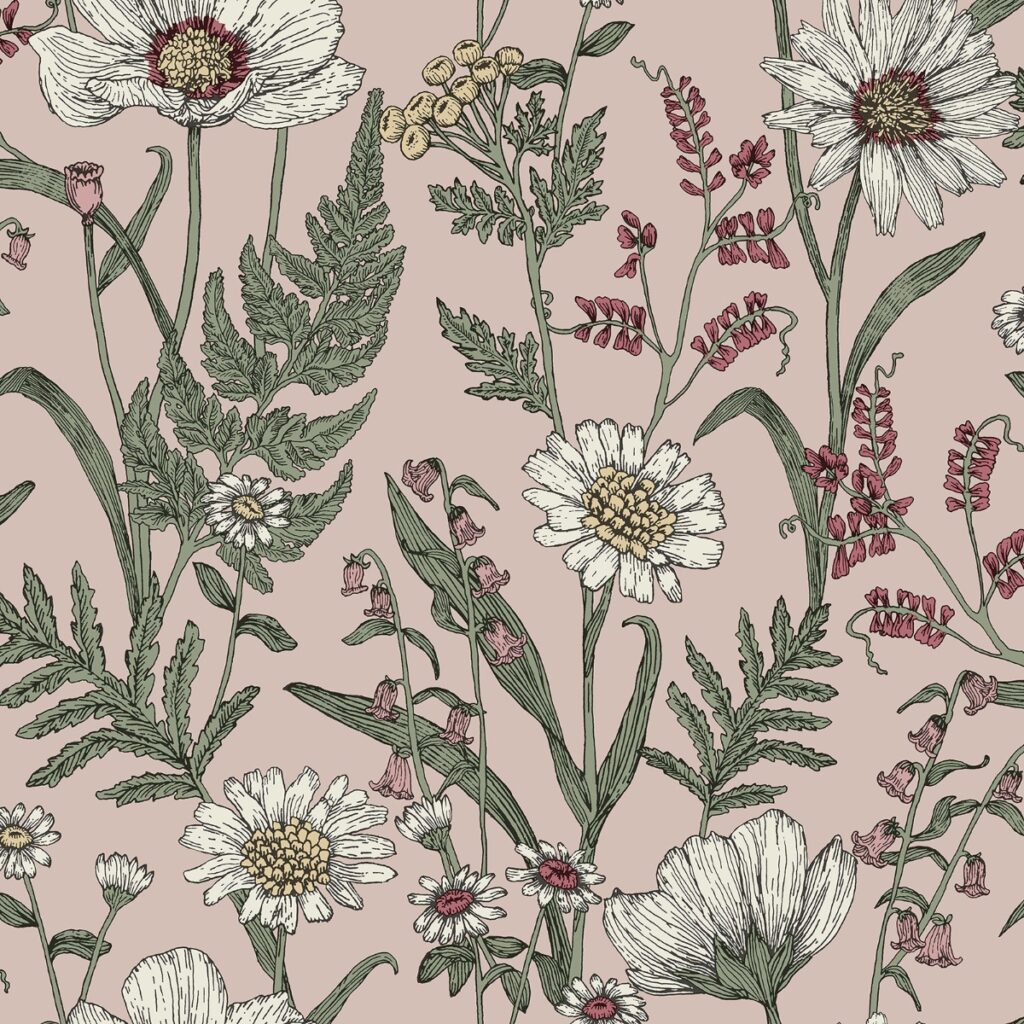
5. Use floral wallpaper to set the character of the room
A floral bedroom can be romantic, traditional, colourful, contemporary or dramatic depending on the design you choose.
Small repeating flowers can give a bedroom a softer cottage or country feel, while Arts & Crafts patterns bring much more structure and detail.
At the other end of the scale, oversized flowers on a dark background can completely change the mood of a room.
When using a busy floral, take one or two colours from the wallpaper and repeat them elsewhere. Bedding, a painted bedside table, lampshades or cushions are enough.
Trying to match every colour in the pattern usually makes a room feel more coordinated than it needs to be.
Explore floral and botanical bedroom wallpaper

6. Try stripes for a bedroom that feels ordered and calm
Stripes are a useful alternative if you want pattern without flowers or foliage.
A fine stripe can behave almost like a plain wallpaper from across the room, while wider stripes create a much more noticeable architectural effect.
Vertical stripes can also emphasise the height of a wall, which may help a bedroom with a relatively low ceiling feel better proportioned.
You don’t have to choose sharply contrasting colours. Tonal stripes – where two shades are fairly close together – give you the structure of the pattern without making the walls too dominant.
They also combine easily with patterned bedding and curtains.
7. Make a small bedroom more interesting, not simply paler
Small bedrooms are often decorated according to one rule: make everything as light as possible. That isn’t the only approach.
A small room can be a good place to take a decorating risk because there is less wall to cover and fewer competing elements.
A repeating pattern across all four walls can create a cosy, wrapped feeling. Alternatively, a stronger wallpaper behind the bed can draw attention towards one part of the room rather than emphasising its dimensions.
If the ceiling is low, a vertical design may help. If the room is narrow, avoid automatically putting the strongest pattern on the shortest wall – consider what you actually see when you enter.
Most importantly, judge the wallpaper in the room itself. Pattern scale can look very different on a screen or small sample.
Our guide to choosing wallpaper explains why both small and large patterns can work in compact rooms, and what to look for before ordering.
8. Use a mural to turn the bed wall into the main event
Murals work particularly well behind a bed because they create a complete composition rather than a repeating pattern.
Woodland scenes, landscapes, oversized flowers and painterly botanical designs can make the wall feel almost like a large piece of artwork.
Think about where the important parts of the image will fall before ordering.
If the central detail of a mural disappears behind a tall headboard, much of its effect may be lost. A lower bed or relatively simple headboard gives the image more room.
Measure carefully too. Unlike ordinary repeating wallpaper, the proportions of the wall matter when you’re choosing a mural.
9. Try wallpaper above panelling
If wallpapering from skirting board to ceiling feels too much, divide the wall.
Painted panelling on the lower part of the wall with wallpaper above can work particularly well in bedrooms, especially with florals and traditional patterns.
It also gives you an obvious way to introduce another colour.
Rather than defaulting to white panelling, pick a colour from within the wallpaper. A muted green, dusty pink, blue or warm neutral can make the two parts of the wall feel deliberately connected.
You can create a similar effect with a dado or picture rail if the room already has one.
10. Look beyond the walls
Wallpaper doesn’t necessarily have to stop when you reach the ceiling.
Continuing a pattern overhead can make a bedroom feel cocooning and is particularly effective in attic rooms, where the distinction between wall and ceiling may already be less obvious.
Another option is to wallpaper the ceiling while keeping the walls comparatively simple.
It isn’t for everybody, but the bedroom is one of the few rooms where you regularly spend time actually looking upwards.
If you’re tempted, softer repeating patterns are generally easier to live with overhead than designs with a very obvious orientation.
11. Use textured wallpaper when you don’t want a strong pattern
A bedroom doesn’t need a noticeable print to benefit from wallpaper.
Grasscloth, linen, hessian and other texture-effect wallpapers can add depth to a room while remaining visually quiet.
This is useful if you already have a patterned headboard, colourful bedding or plenty of artwork.
Textured designs also respond to changing light. A surface that looks fairly plain during the day can become much more noticeable under bedside lamps in the evening.
Warm neutrals, muted greens and earthy colours work particularly well if you’re aiming for a comfortable, understated bedroom.
12. Coordinate wallpaper with the headboard and bedding
The bed occupies a lot of visual space, so treat it as part of the decorating scheme rather than choosing wallpaper in isolation.
If your headboard is already patterned, a quieter wallpaper may give it room to breathe. With a plain upholstered or timber headboard, you can afford to make the wall behind it much busier.
Look for relationships rather than exact matches.
You might pick up the background colour of the wallpaper in the bedding, repeat one small accent colour in a cushion, or choose a headboard fabric that contrasts with the wall.
The room will usually look more relaxed if everything works together without appearing to have been bought as a matching set.
13. Don’t forget children’s and guest bedrooms
A guest bedroom is a useful place to try wallpaper you might hesitate to use in your main living spaces.
It can give a relatively simply furnished room character without requiring lots of furniture or decoration.
Children’s bedrooms offer even more scope for colour and pattern, although it is worth thinking about how quickly a very age-specific design might be outgrown.
Nature, animals, stars, stripes, maps and less juvenile illustrative designs can often last longer than wallpaper tied closely to a particular age.
For a nursery, softer colours and gentle patterns can provide interest without dominating a small room.
Which wallpaper is best for a bedroom?
There isn’t one type of wallpaper that is inherently best for bedrooms.
For a calm, understated room, look at soft botanicals, subtle stripes, small repeating patterns and textured designs.
For something more traditional, consider florals and Arts & Crafts patterns.
If you prefer a richer bedroom, dark botanicals, deep heritage colours and large-scale florals can create a wonderfully enveloping space.
And if you want the wallpaper to become the main decorative feature, a mural or oversized design behind the bed can do much of the work for you.
The best choice is one that works with the light, furniture and proportions of your particular bedroom – and still feels right when you switch the main light off and turn the bedside lamps on.
For a broader look at the colours and patterns emerging now, see our wallpaper trends for 2027.
Before you order bedroom wallpaper
Order a sample whenever possible and put it on the wall where you intend to use the wallpaper.
Don’t just hold it up for a few minutes. Leave it there and see what happens to the colour throughout the day and under artificial light.
Check the width and pattern repeat, measure the walls carefully and allow for matching and trimming when calculating how many rolls you’ll need.
If you’re decorating a feature wall, double-check the width behind the bed. If you’re wallpapering the whole bedroom, remember to calculate each wall rather than simply estimating from the room’s floor dimensions.
Taking a little more time before ordering is much easier than discovering that you’re one roll short halfway around the room.
 Living Room Wallpaper Ideas