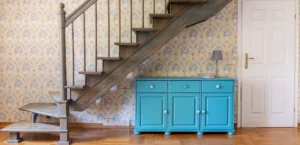
Hallways are often the last part of the house we think about decorating, despite being the first space we see when we come through the front door. They’re also rather different from other rooms. Hallways can be narrow, short on natural light and interrupted by doors, radiators and staircases. In many homes, the wallpaper has to continue up a tall stairwell and onto a landing, where the proportions change completely.
That can make choosing a wallpaper surprisingly difficult. The good news is that you don’t need a large entrance hall or an elegant sweeping staircase to make wallpaper work. A modest Victorian terrace, a modern hallway or a narrow passage with several doors can all benefit from the right choice of pattern and colour.
Here are some ideas to help you decide what will work in your home.
Start with the shape of your hallway
Before looking at wallpaper designs, stand at your front door and consider what you actually see.
Is there a long, narrow corridor? Does the staircase dominate the entrance? Is there a wall at the far end that naturally draws your eye? Or does the hall open into a larger space with several doors leading off it? These details matter because hallways rarely offer the same uninterrupted wall space as living rooms or bedrooms.
A large floral design may look wonderful on a showroom wall but lose much of its character when broken up by five doorways. Equally, a small repeating pattern might work beautifully in a narrow entrance because you can appreciate the design even on short sections of wall.
The best wallpaper is not necessarily the one that makes the strongest impression in a photograph. It’s the one that works with the proportions of your hallway.
If you’re unsure about pattern size, our guide to choosing wallpaper explains how scale, colour and lighting affect the finished result.
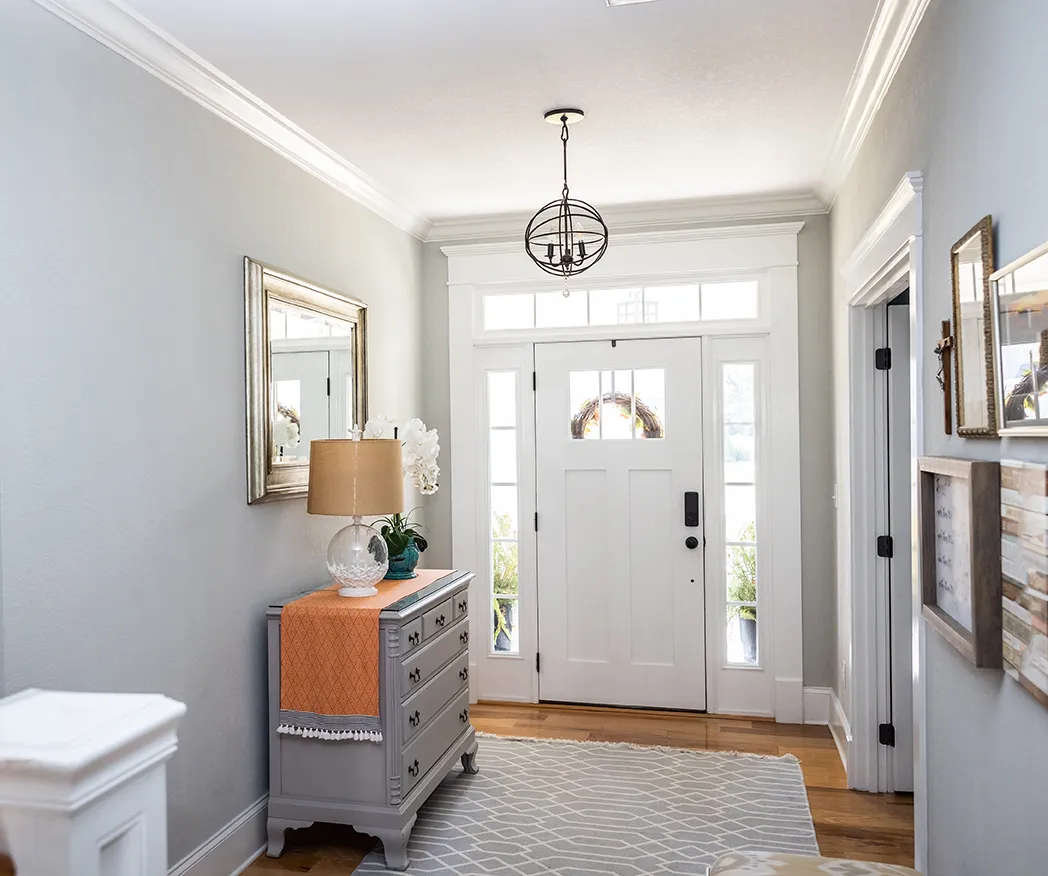
Wallpaper ideas for a narrow hallway
A narrow hallway doesn’t have to be decorated in plain white or cream. In fact, a little pattern can make an otherwise unremarkable space considerably more interesting. The trick is to consider how the wallpaper looks from both ends of the hall and how close you’ll be to it when walking past.
Small repeating patterns
Delicate florals, trailing leaves and subtle geometric designs are particularly useful in narrow hallways. Because the pattern repeats frequently, you don’t need a large uninterrupted wall to appreciate it. These designs also work well around doorframes, where larger motifs might be awkwardly cut off.
Soft botanical patterns in sage green, muted blue or warm natural colours can introduce detail without making a confined space feel too busy.
Striped wallpaper
Vertical stripes can emphasise the height of a hallway, particularly where the ceiling is relatively low. Fine stripes offer a more understated effect, while wider stripes make a stronger decorative statement.
Be careful with very high-contrast stripes, though. In a long, narrow corridor, a bold black-and-white or brightly coloured pattern might be more visually demanding than you intended. Stripes are also less forgiving of uneven walls and corners, so careful hanging is important.
Light and dark colours
It’s tempting to assume that a narrow hallway must have pale wallpaper. Lighter colours can help reflect available light, but they won’t necessarily solve a gloomy entrance. A hallway with very little daylight may remain quite dark regardless of the wall colour. Sometimes a deeper green, blue or warm earthy shade creates a more deliberate and welcoming result.
Try samples in the actual hallway, particularly with the lights switched on in the evening.
Explore wallpaper for smaller and narrower hallways
A mixture of soft botanical designs, subtle texture and smaller-scale patterns works well here.
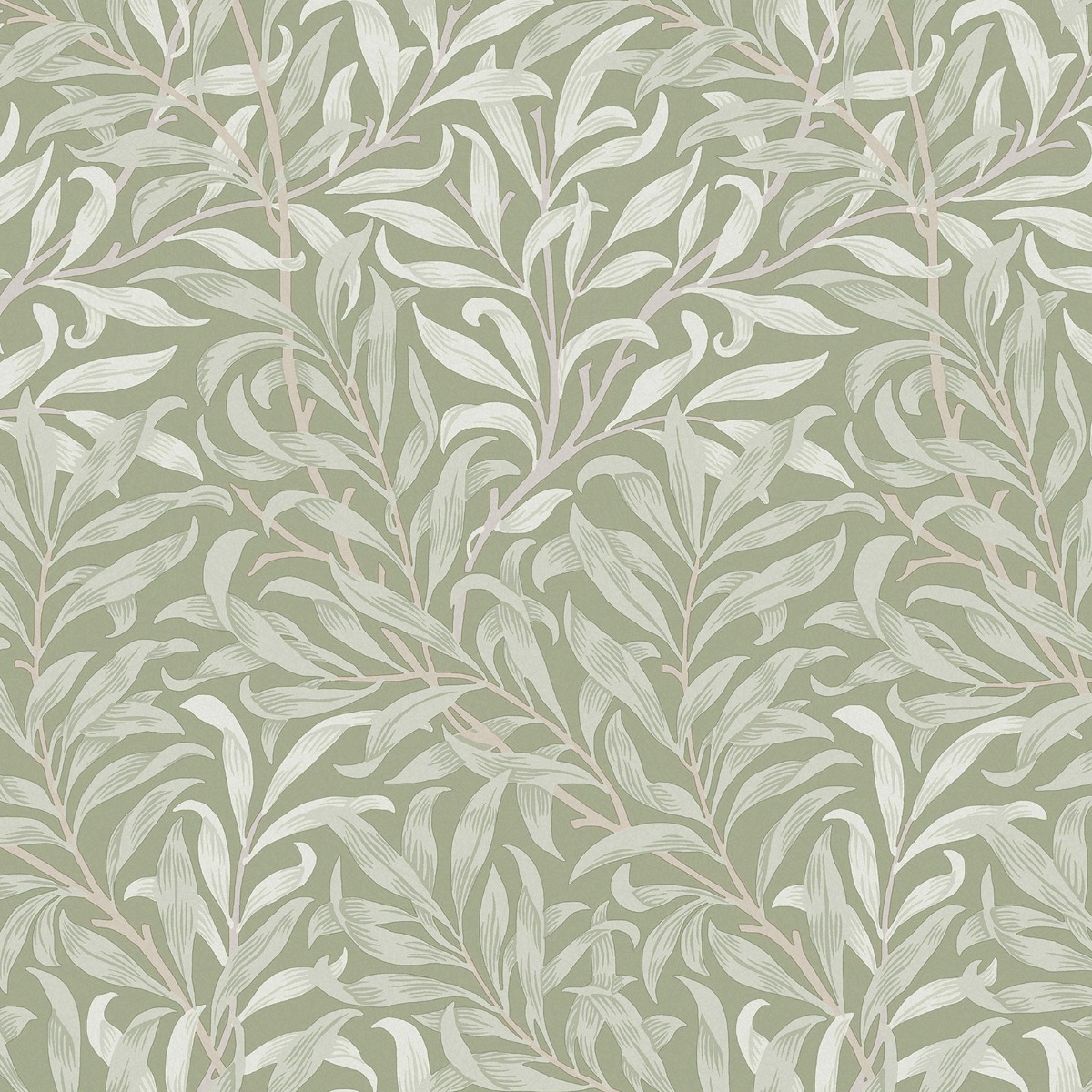
William Morris Willow Bough Sage Green
Flowing leaf pattern
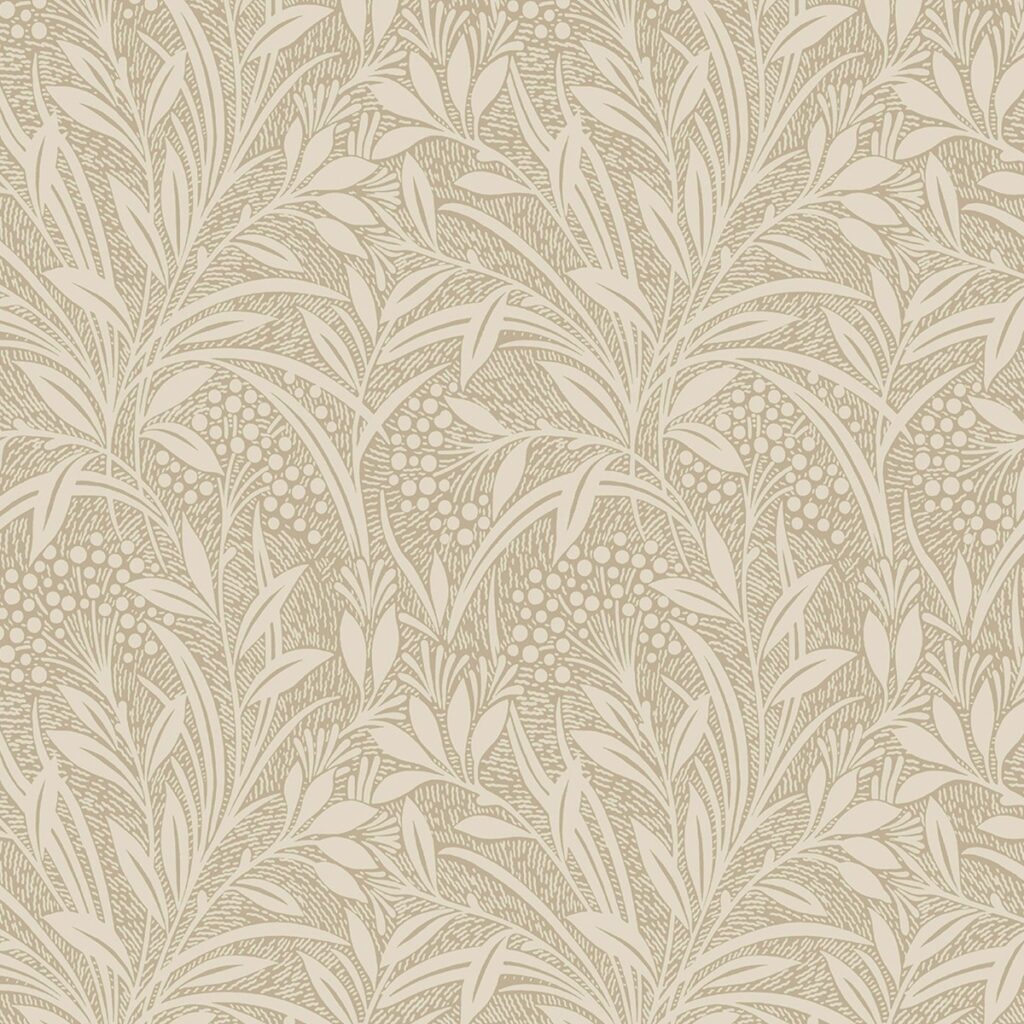
Laura Ashley Barley Leaves – Dusky Natural
Soft, neutral botanical pattern
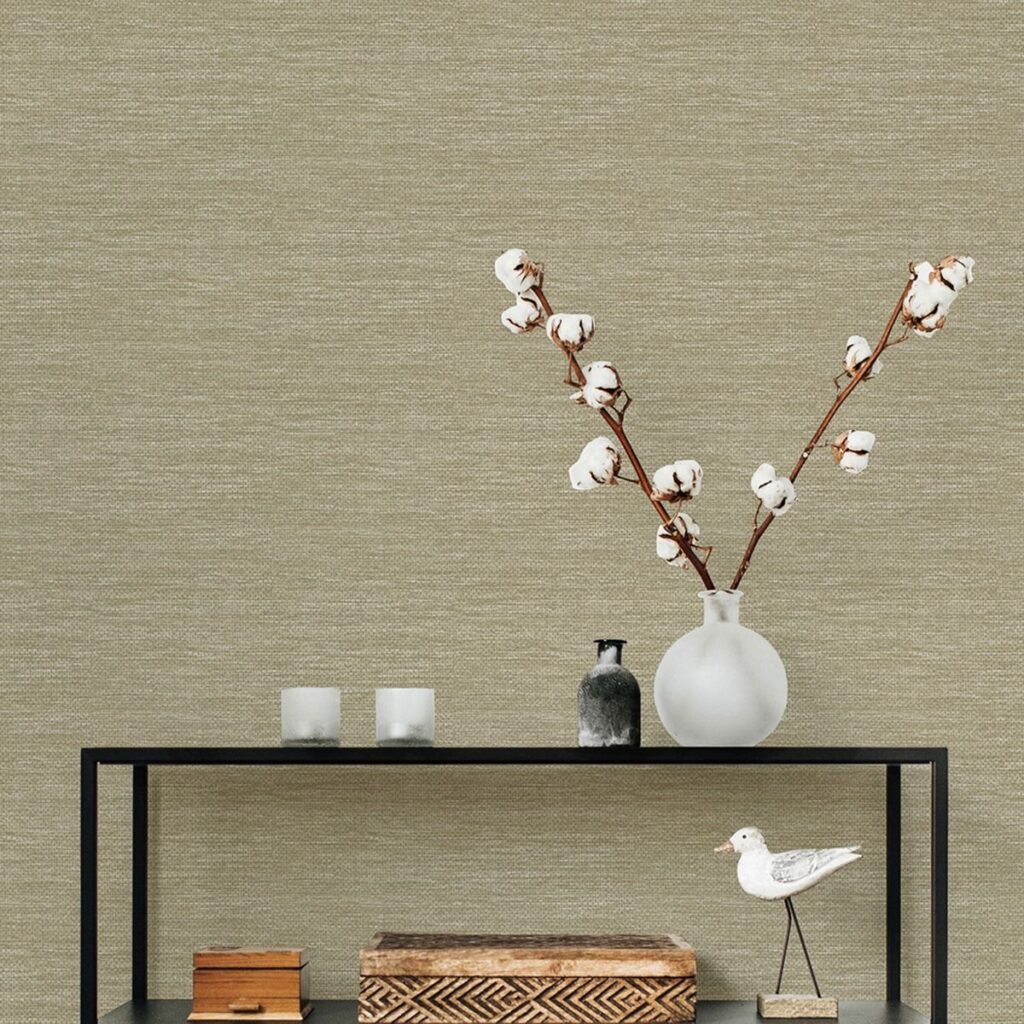
Fine Decor Malin Grasscloth – Sand
Subtle washable texture-effect
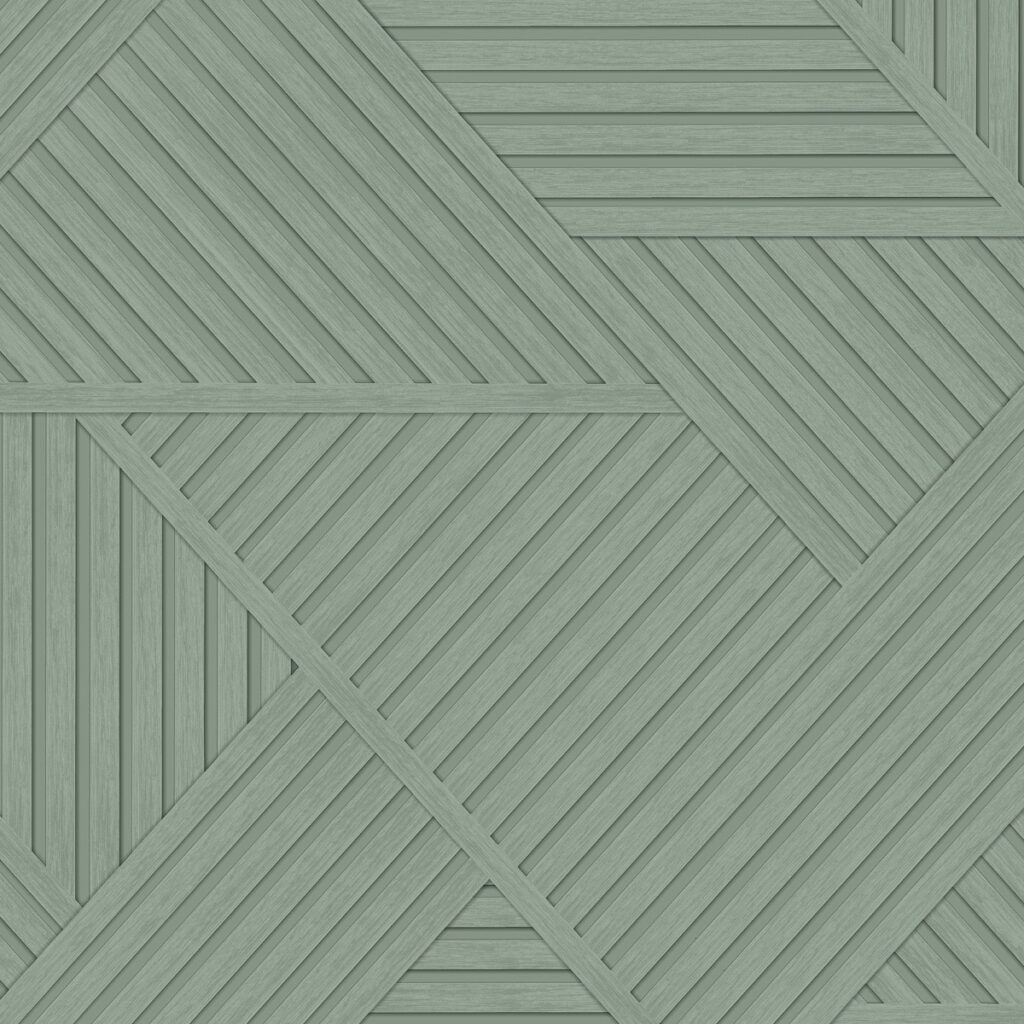
Holden Wood Geometric – Sage
Contemporary wood-panel effect
Make more of a staircase wall
A staircase gives you an opportunity that most other parts of the house don’t have: a tall expanse of wall that can often be seen from several different positions. Depending on the layout, you may see the same wallpaper from the entrance hall, halfway up the stairs and again from the landing.
This makes pattern scale particularly important. A design that looks rather large when you’re standing beside it may become much more balanced when viewed across the full height of the stairwell.
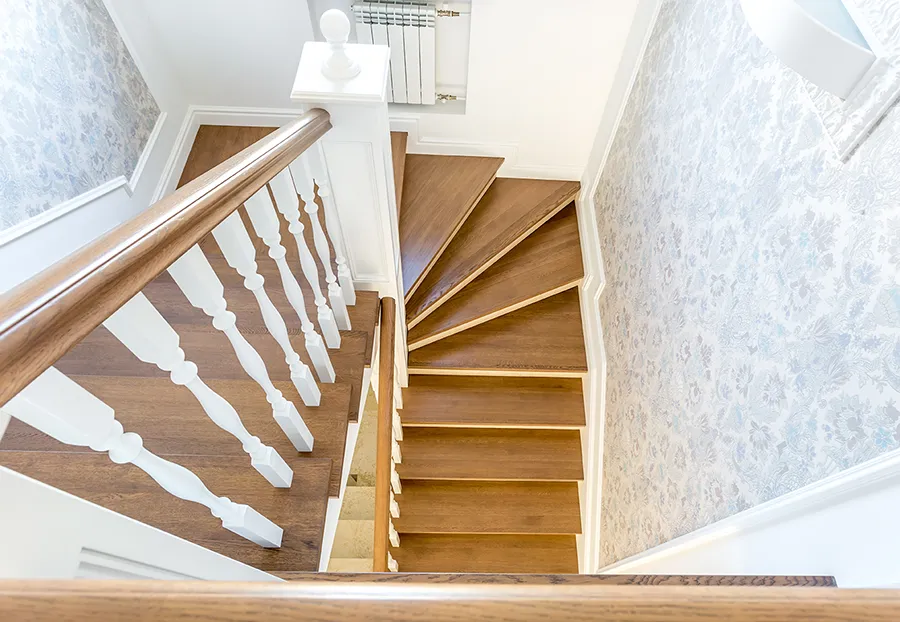
Large botanical and floral patterns
Bold foliage, decorative branches and larger floral patterns can look excellent on a staircase wall. The height allows more of the design to be appreciated, and the movement of leaves or trailing stems can complement the rising line of the stairs.
However, check where important motifs will appear. A large flower or bird might be partly hidden by a handrail or cut off by the slope of the staircase.
Geometric wallpaper
Geometric designs can give a staircase a more contemporary appearance. Look for patterns with a clear, balanced repeat. Subtle interlocking shapes or Art Deco-inspired designs can bring structure to an otherwise awkward wall.
Very precise lines will make poor alignment more noticeable, particularly where walls aren’t perfectly straight.
Should you wallpaper one staircase wall or the whole stairwell?
Both approaches can work.
Wallpapering the main staircase wall can make it the decorative focus, especially if the surrounding walls are painted in a complementary colour. But continuing the wallpaper around the stairwell and onto the landing can create a more unified effect. There’s no reason to limit wallpaper to one wall simply because feature walls have been fashionable for years.
Our feature wall guide looks at when one decorated wall makes sense and when covering the whole space works better.
Use botanical wallpaper to connect the hallway with the rest of your home
Botanical wallpaper is particularly versatile in entrances and stairwells.
Leaves, branches, flowers and woodland designs work with a wide range of interiors, from traditional houses to contemporary homes. In a hallway with wooden flooring, a timber staircase or painted panelling, green botanical wallpaper can provide a natural link between these different materials. Traditional leaf patterns can also be surprisingly effective in modern entrances when paired with simple furniture and contemporary lighting.
If you want something subtle, choose a design with a limited colour palette and a relatively quiet background. For greater impact, look at richly coloured florals, woodland scenes or designs featuring birds and other wildlife. Laura Ashley, Holden Décor and William Morris At Home offer particularly interesting interpretations of these styles.
Wallpaper and panelling can work beautifully together
One of the most practical approaches to decorating a busy hallway is to combine wallpaper with painted wall panelling. Wallpaper can be used above a dado rail, with timber panelling or another suitable durable finish below. This is especially useful where the lower part of the wall is likely to be knocked by shoes, bags, buggies or furniture.
The combination works naturally in Victorian and Edwardian properties, but it can be equally effective in newer homes.
See our wallpaper and wall panelling guide.
Wallpaper above a dado rail
A dado rail creates a natural dividing line. You can use a patterned wallpaper above it and paint the wall below in a colour taken from the design. For example, a botanical wallpaper containing muted green foliage might look lovely above sage green or warm cream panelling. A stronger floral can also work well above darker painted woodwork, particularly where the hallway has good natural light.
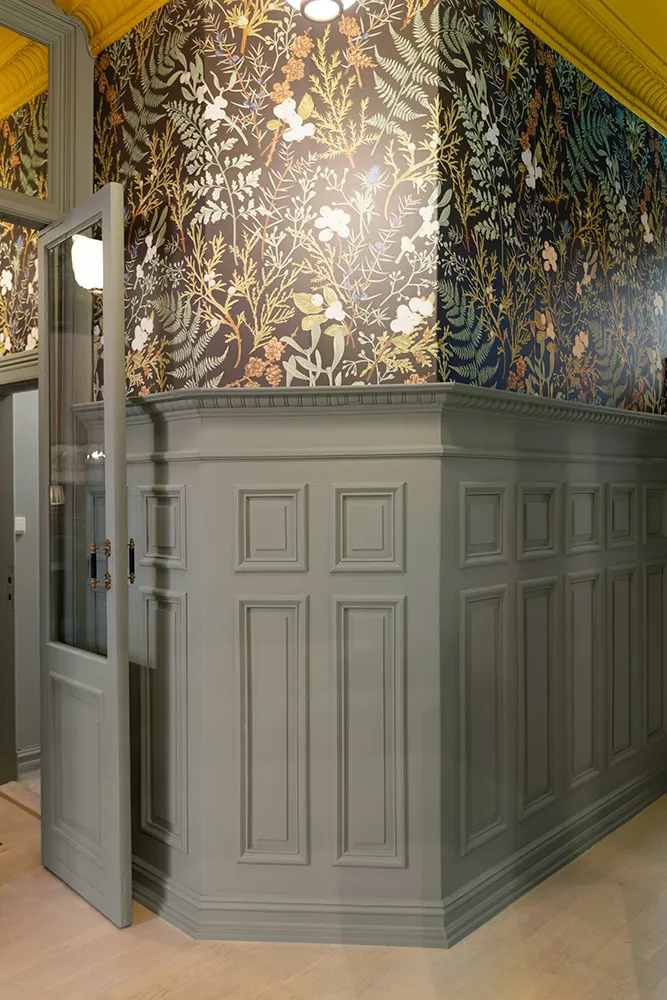
Continue the panelling up the stairs
If the panelling continues along the staircase, you can carry the same wallpaper above it. The result can make the entrance hall, staircase and landing feel like one continuous space. Pay attention to where the wallpaper meets the ceilings and doorframes, though. The dividing line should feel deliberate rather than simply following whatever space remains.
For a modern alternative, consider plain painted lower walls with decorative wallpaper above, without traditional timber panelling.
Choosing wallpaper for a dark hallway
Many UK homes have entrance halls that receive little direct natural light. Terraced houses, for example, may have a glazed front door but few other windows until you reach the landing. In these situations, choosing wallpaper based only on photographs taken in bright showrooms can be misleading.
Warm neutrals, soft greens and muted blues are often easy to coordinate, but look at their undertones. A grey-blue wallpaper may appear considerably cooler in a north-facing entrance, while creams and warm natural shades can feel softer under artificial lighting.
Dark wallpaper is another option worth considering. Deep forest green, navy or a richly coloured floral can create a cosy, distinctive entrance, particularly when combined with warm wall lights and attractive woodwork.
The important thing is to make the lighting part of your decorating decision rather than something to think about afterwards.
Before buying, place a sample beside the skirting boards, doorframes and flooring. Look at it at different times of day.
Hallway wallpaper ideas for period homes
Period houses often have architectural details that lend themselves naturally to wallpaper. A Victorian hallway might include a traditional staircase, decorative cornicing, tiled flooring or substantial skirting boards. Edwardian homes may have wider entrances, stained glass and painted timber features.
Wallpaper can help bring these elements together without making the house feel like a museum.
Traditional Arts & Crafts designs
Wallpaper inspired by William Morris and the Arts & Crafts movement can work particularly well in period hallways. Repeating leaves, flowers and woodland motifs complement timber, traditional tiles and painted joinery.
You don’t have to choose the darkest or most elaborate colourways. Heritage patterns in sage green, cream or muted blue can look quite contemporary.
Decorative florals and birds
For a softer period-inspired scheme, consider wallpapers featuring flowers, branches and birds. These can look particularly attractive beside a painted staircase or panelled lower walls.
If you have a tall entrance hall, a larger pattern may be easier to accommodate than it would be in a small bedroom.
Richer colours and statement designs
Period hallways can also carry dark, dramatic wallpaper remarkably well. Deep green, plum, burgundy and gold-toned patterns can work beautifully with dark wood or painted staircases.
The overall effect depends as much on lighting and the colour of the woodwork as it does on the wallpaper.
Explore characterful and traditional hallway wallpaper
Consider these for entrances where you want richer colour, a more decorative pattern or a distinctive period-inspired look.
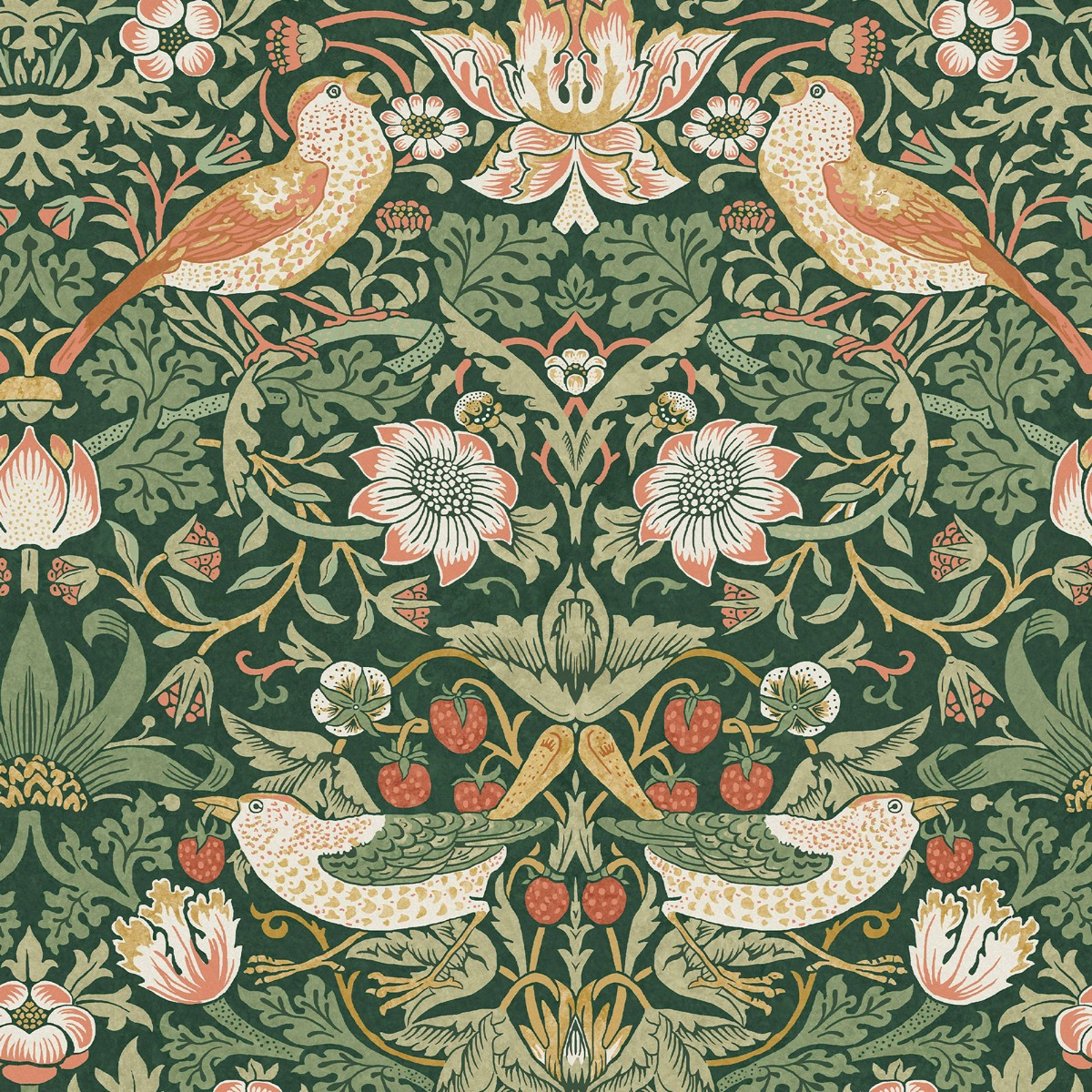
William Morris At Home Strawberry Thief
Classic Arts & Crafts design
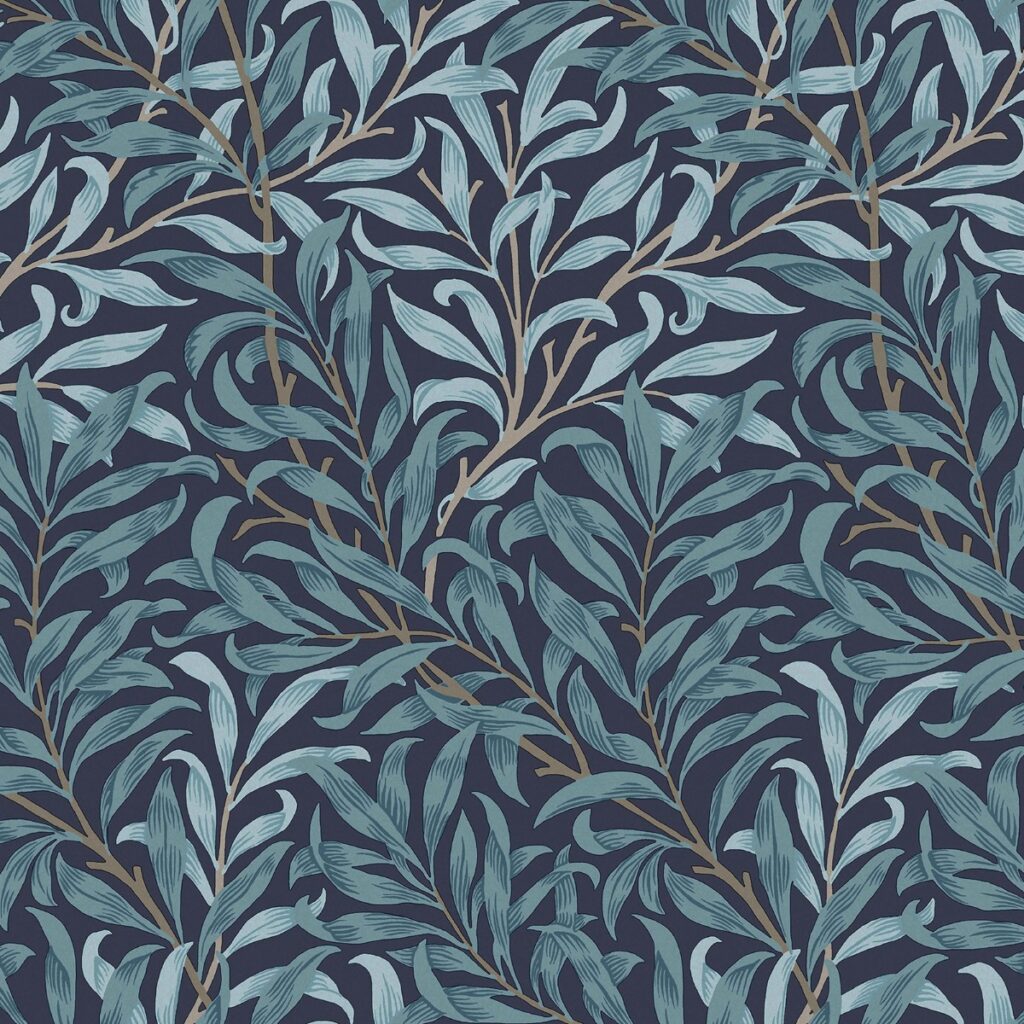
William Morris Willow Bough – Deep Blue
Rich heritage leaf pattern

Holden Wonderland Tropical Wallpaper – Plum
Dramatic modern alternative
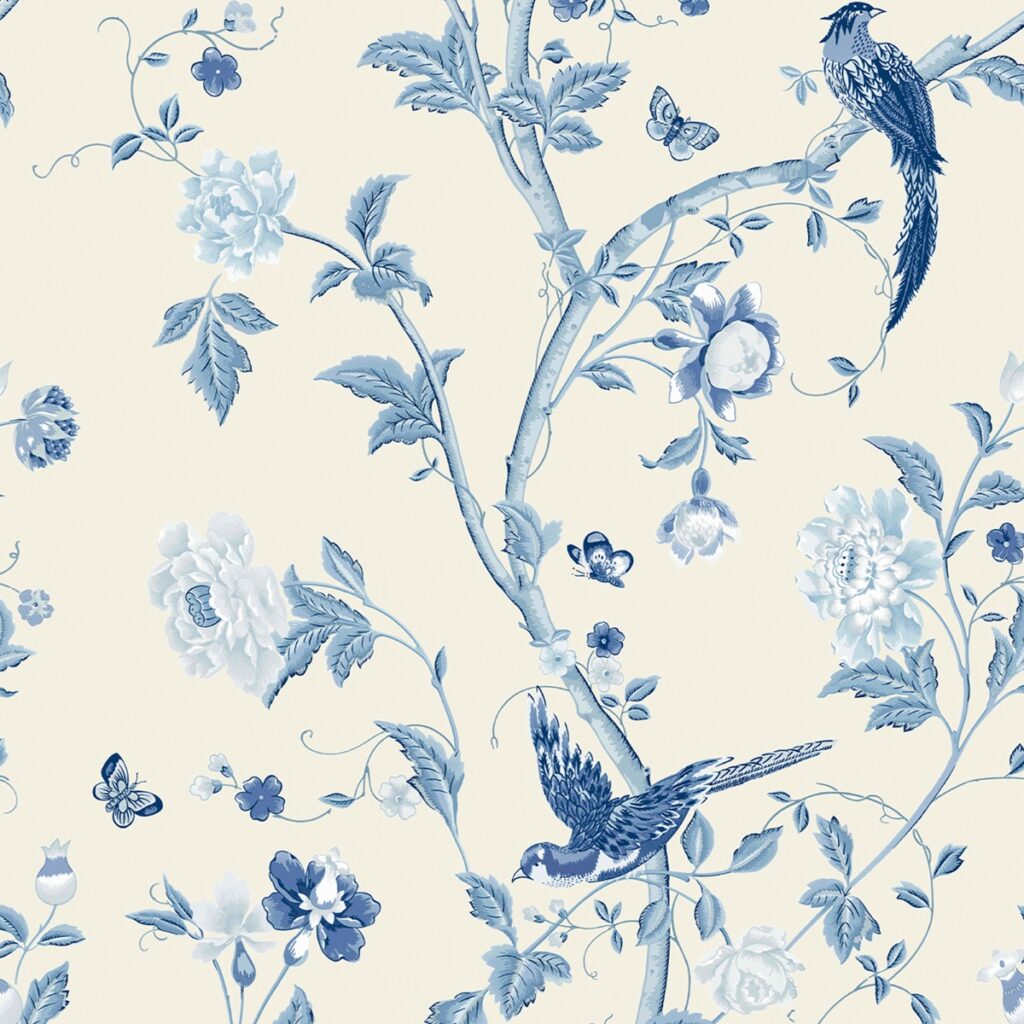
Laura Ashley Summer Palace – Royal Blue
Decorative traditional design
Choose a wallpaper that can cope with everyday life
Hallways tend to take more punishment than most other rooms.
Coats brush against walls, bags are put down, furniture is carried upstairs and children or pets may regularly come into contact with the wallpaper. That makes the wallpaper’s finish and cleaning instructions especially important.
Look at washability
Some wallpapers are labelled spongeable, others washable or scrubbable. These terms aren’t interchangeable. Check the manufacturer’s instructions to establish how much cleaning the surface can tolerate. A delicate paper wallpaper may be perfectly suitable above a dado rail or on a wall that rarely gets touched, but it might not be your first choice beside a busy coat rack.
Consider textured and vinyl wallpapers
Some vinyl and non-woven wallcoverings offer practical advantages in busy spaces, although durability varies between products. Textured wallpaper can also be useful where you want a subtle finish rather than a strong pattern.
Don’t assume that every textured wallpaper is hardwearing, however. Natural fibres and delicate raised surfaces may be more difficult to clean than a smooth washable finish.
Think about where the wallpaper will go
A practical compromise is to use a more durable finish at the bottom of the walls and decorative wallpaper above. Alternatively, wallpaper the less exposed staircase wall while keeping frequently touched areas painted. This lets you use a design you love without placing it in the part of the hallway most likely to suffer damage.
Decorating the hallway and landing together
One of the decisions that can make the biggest difference is whether to use the same wallpaper throughout the hallway, stairs and landing.
Using one design creates continuity and avoids awkward changes at corners or halfway up the staircase. It can be especially effective with repeating botanical patterns, stripes and subtle textures. But you don’t necessarily have to wallpaper every surface.
You could use a statement wallpaper in the entrance and pick out one of its colours for the staircase and landing. Alternatively, use wallpaper throughout the staircase and keep the landing walls painted if you want the upper floor to feel quieter.
Try to avoid changing between several competing wallpaper patterns in a relatively small area, especially where they can all be seen at once. The flooring, bannisters and door colours will already contribute plenty of visual detail.
Before ordering: measure the stairwell carefully
Measuring a straightforward hallway wall is usually simple. A stairwell can be considerably more complicated. You may have very tall wall sections, sloping ceilings, awkward corners and different wall heights as you move up the stairs.
Start by measuring each wall section and noting the greatest height. Then check the dimensions of your chosen wallpaper, particularly the roll width and pattern repeat.
Large repeating patterns often require more wallpaper than expected because the design has to line up between adjacent drops. A wallpaper with a long pattern repeat may produce substantial wastage on a tall staircase, especially where the heights vary.
It’s also worth checking whether the supplier recommends ordering all rolls from the same batch to minimise possible shade differences.
Is wallpapering a stairwell a DIY job?
It depends on the staircase and your experience. A straightforward entrance hall may be quite manageable. A tall stairwell with difficult access is another matter. Working above a staircase requires a stable, properly designed working platform. Ordinary ladders positioned on steps can be unsafe. If you can’t reach the full wall safely, consider employing a professional decorator with the right access equipment.
A good finish is particularly important with strong patterns, where imperfect joins may remain visible across a large expanse of wall.
For further practical information, see DIY Doctor’s guide to wallpapering a stairwell.
Making the final choice
If you’re uncertain between several designs, order samples and look at them in the hallway itself. Place them at different heights if possible, particularly if the staircase receives more daylight than the entrance.
Consider the wallpaper from the front door, from halfway up the stairs and from the landing. These are often surprisingly different views. Also think about the things that won’t be changing: the flooring, staircase, doors, lighting and any existing furniture. A wallpaper that looks wonderful on its own may not necessarily suit dark timber, patterned floor tiles or brightly painted woodwork.
There’s no need to choose the boldest or most fashionable design. A relatively simple wallpaper that works with the house can be much more satisfying than a dramatic pattern chosen purely for effect.
And if you genuinely love a strong floral, a traditional Morris pattern or a dark botanical design, don’t dismiss it simply because your hallway is small. Sometimes an entrance hall is exactly the right place to be adventurous.
For more decorating inspiration, explore our How to Choose Wallpaper guide, Feature Wall Ideas or the latest Wallpaper Trends for 2027.
 Feature Wall Ideas: Which Wall Should You Wallpaper?
